Category: Reviews

Home Reviews
Stumbling Past the Tree
Post

Stumbling Past the Tree

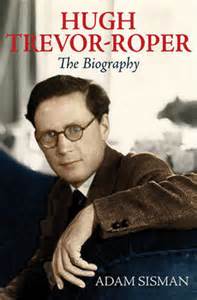
This is a solid and sensible biography, but it is not a scintillating one.  I have the impression that Adam Sisman is a little wary of his subject; he indicates respect for Hugh Trevor-Roper, but not affection.  Yet without personal warmth to some degree, it is hard to catch the reader’s imagination.  However, there is...
View From the Left Bank
Post

View From the Left Bank

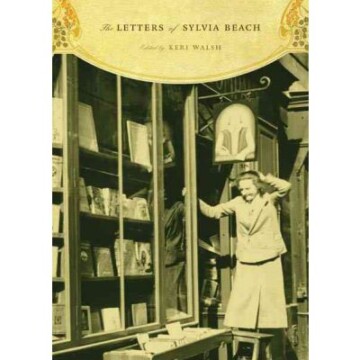
After the Great War, Sylvia Beach founded, with money from her mother, Shakespeare and Company, an English-language bookshop and lending library on the Left Bank in Paris.  As the American expatriate wrote much later, “I have always loved books and their authors.”  She was encouraged by another woman bookseller, Adrienne Monnier, well known to French...

Sustained Magnificence
Post

Sustained Magnificence

Sixty-five years after the last guns ceased firing on the last Pacific atoll, Britons of all political persuasions are still wallowing in tepid World War II nostalgia. For Atlanticists, neoconservatives, and classical liberals, the war was a great Anglosphere achievement, a landmark en route to social mobility plus mercantilism.  For nationalists and romantics, there is...
An Unfinished Story
Post

An Unfinished Story

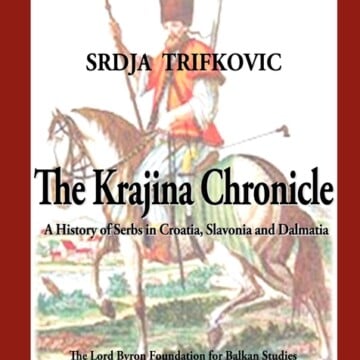
Srdja Trifkovic is no stranger to Chronicles readers, many of whom have found his articles commenting on foreign affairs, with particular attention to the Balkans, to be insightful, penetrating, and written with authority.  His latest book, The Krajina Chronicle, provides further confirmation of his extraordinary talent. The book is a history of the Serbian warrior-farmers...
A Question of Dots
Post

A Question of Dots

John Poindexter—Navy veteran and national-security advisor during President Reagan’s second term—resigned in disgrace after congressional hearings revealed that the United States, with Poindexter’s approval and with the help of an enterprising young lieutenant colonel named Oliver North, was selling arms to Iran and giving the profits to the Nicaraguan Contras to support their guerilla war...
A Legend for Our Time
Post

A Legend for Our Time

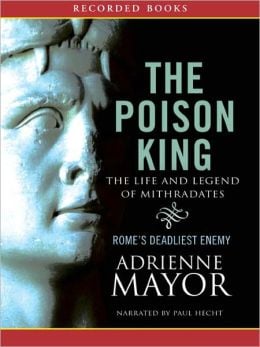
In the spring of 88 b.c., dozens of cities across Asia Minor united in a secret plot to kill all the Romans and Italic peoples—man, woman, and child—in their territories.  How the plot was kept secret remains unknown, but the massacre was carried out successfully.  Ancient sources indicate that almost all Roman and Italic residents...
Post

An Unfinished Story

A review of The Krajina Chronicle: A History of Serbs in Croatia, Slavonia and Dalmatia • by Srdja Trifkovic • Chicago: The Lord Byron Foundation • 250 pp., $20.00 Srdja Trifkovic is no stranger to Chronicles readers, many of whom have found his articles commenting on foreign affairs, with particular attention to the Balkans, to ...

The Path to Modernity
Post

The Path to Modernity

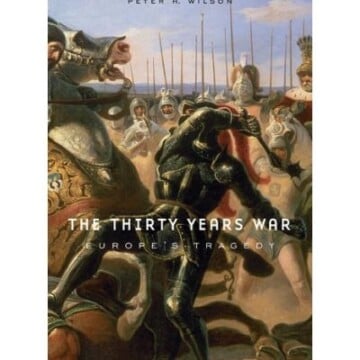
The Hobbesian mayhem that struck Europe in the first half of the 17th century was not an event, or a series of events, befitting the designation of a war.  The plural form, as in the Napoleonic Wars, would be more apt.  It was a pancontinental minus-sum-game involving all major players (save Russia) that continued, relentlessly,...

The Creaturely Myth
Post

The Creaturely Myth

There is—there must be–all the difference in the world between an autobiography and a novel written in the first person.  Are we clear?  Hillary Rodham Clinton’s Living History, for example, has much in common with Charles Dickens’ David Copperfield or even Great Expectations, with the obvious exceptions that the “truth” seems to be fiction, and...

Sympathetic Magic
Post

Sympathetic Magic

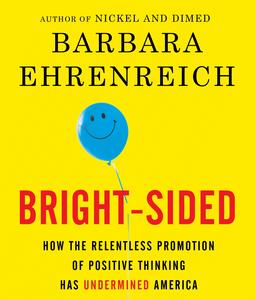
Endorsements by Christopher Hitchens and Nora Ephron do not inspire confidence in Bright-Sided.  Nor does Barbara Ehren­reich’s website, with its list of soporific-sounding previous publications, which includes Long March, Short Spring: The Student Uprising at Home and Abroad and Witches, Midwives, and Nurses: A History of Women Healers.  Her enumerated interests also threaten tedium—healthcare, peace,...

Falling Apart
Post

Falling Apart

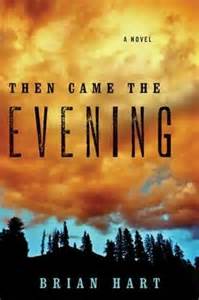
North-central Idaho is rugged can­yon, mountain, and ranch country.  Its dominant culture is that of the British and American borderlands.  Its people are descendants of 19th-century pioneers and homesteaders (some of them Missouri Confederates who went west after the war).  They are fiercely individualistic, but they also take care of one another.  They know how to...

Mystery Tour
Post

Mystery Tour

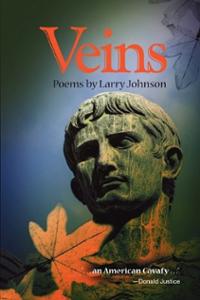
Larry Johnson’s first book of poems, Veins, promises an engagement with history and tradition that is respectful, lively, and current.  Open to any page at random, and you will find examples of real language handled by a poet who obviously knows what a poetic line is.  (So many contemporary poets do not.)  Consider these wonderful...

The Logic of the Map
Post

The Logic of the Map

Soon after his election in 1844, James K. Polk sat down with the historian George Bancroft and, before offering him the Cabinet post of secretary of the Navy, sketched the four objectives of his presidency.  They were to lower the tariff, restore the independent treasury system, extend American sovereignty over the vast Oregon Country (claimed...

Who Won the Cold War?
Post

Who Won the Cold War?

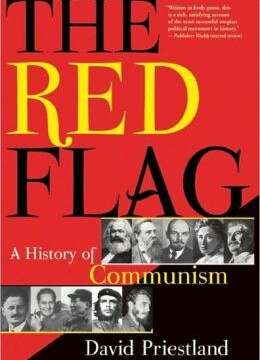
In his Foreword to Witness, Whittaker Chambers, writing in the “form of a letter to my children,” tries to explain the appeal of communism: I see in Communism the focus of the concentrated evil of our time.  You will ask: Why, then, do men become Communists?  How did it happen that you, our gentle and...

Past, Present, and Future
Post

Past, Present, and Future

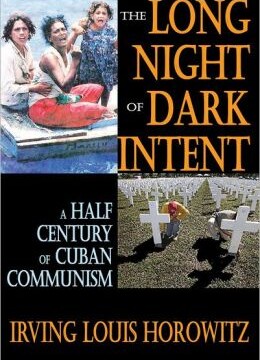
Transaction Publishers has a long history of producing first-rate scholarly works, among them a series of books under the title Cuban Communism, indispensable for the study of post-1959 Cuba.  The present one, by the editor of the series, covers a half-century of Cuban Marxism and introduces us to many of the major issues related to...

Great Cooptations
Post

Great Cooptations

Two politicians get conservative fundraisers’ juices flowing like no others.  One, the late Sen. Edward M. Kennedy, was surely mourned as much by ambitious Richard Viguerie imitators as by teary-eyed, Camelot-addled liberals.  The other, former Alaska Gov. Sarah Palin, they hope will be a gift that keeps on giving for many years to come. Conservatives...

Not a Live Tribe
Post

Not a Live Tribe

Alphabetical order is useful for miscellaneous collections of items such as indexes, directories, dictionaries and encyclopedias, address books, and musings and bits of lore (Voltaire’s Alphabet of Wit, for example).  Elsewhere it serves a pedagogical purpose, as in children’s readers and old collections (medieval bestiaries, botanical compendia).  John Ashbery’s latest volume, Planisphere: New Poems, contains...

Unknown Soldiers
Post

Unknown Soldiers

Thomas Carlyle wrote that “History is the essence of innumerable Biographies.”  While that description does not cover all the duties of historianship, it is true in an important sense.  History that becomes too abstract loses its vital connection with the lives of real human beings.  The people of the past were human, and we are...

Parallel Lives
Post

Parallel Lives

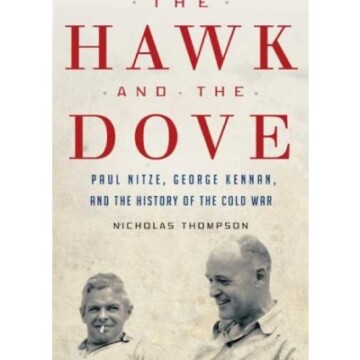
Nicholas Thompson, the grandson of Paul Nitze, chose to write a biography of his grandfather, but with a restriction.  Thompson thought it best to describe and compare his grandfather’s public career together with that of another public personage, George Kennan.  I wonder why.  Perhaps for the sake of an extensive biography.  We ought not attribute...

Soulcraft as Leechcraft
Post

Soulcraft as Leechcraft

The photographs on the jacket of Our Times provide a pointed reminder that the British past is not just another country but another continent. The newly crowned Queen looks self-conscious yet confident in Cecil Beaton’s celebrated photograph of 1953, holding the scepter and orb of state in steady hands, her slender frame enveloped in ermine...

Prometheus Unbound
Post

Prometheus Unbound

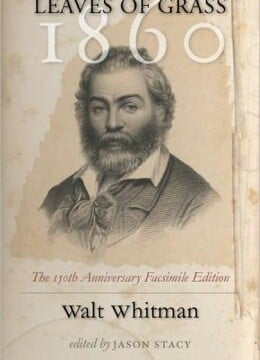
This volume, belonging to the Iowa Whitman Series, is identified as “the 150th Anniversary Facsimile Edition” of Leaves of Grass, third edition (1860).  Originally issued in 1855, at the author’s expense, the collection was revised and republished in 1856, 1860, 1867, 1871, 1881-82, and finally 1892.  The versions varied greatly in length and contents, as...

Gobbling Poison
Post

Gobbling Poison

Mankind loves mysteries—the weirder the better.  Throughout recorded history, rites open to the initiated only have been performed in restricted sanctuaries; this not only provides a feeling of superiority to the participants but allows outsiders to indulge in endless speculation about “what really goes on” at such times and in such places.  The rise of...

Post

Journalism as Direct Mail

“Politics and abuse have totally corrupted our tastes,” Horace Walpole complained to a correspondent in 1771.  “Nobody thinks of writing a line that is to last beyond the next fortnight.” Politics in Great Britain in the late 18th century was as agitated as that of America early in the 21st, although the divisions it reflected...

Dark Age to Dark Age
Post

Dark Age to Dark Age

The decline and fall of the Roman Empire began to haunt the West’s imagination many centuries before Gibbon’s masterpiece immortalized the phrase.  Indeed, it is hard not to agree with Fried­rich Heer’s judgment that every European empire since Char­le­magne’s time—the Holy Roman Empire, Czarist Russia, Napoleonic France, Hitler’s and Stalin’s failed experiments—was a conscious attempt...

A Man of One Idea
Post

A Man of One Idea

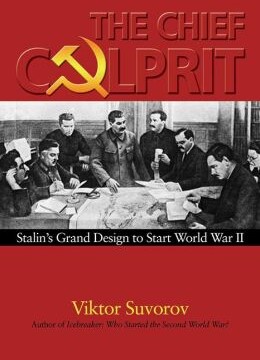
The Russian edition of Viktor Suvorov’s Icebreaker: Who Started the Second World War? sports a blurb on the back, quoting a review of the English translation of the book published in a British newspaper on May 5, 1990.  Suvorov, runs the quotation, is arguing with every book, every article, every film, every NATO directive, every...

Brush the Distance
Post

Brush the Distance

Cath­arine Savage Brosman’s latest book, Breakwater, is a stimulating addition to her always intriguing poetic realm.  The book is packed with superlative individual poems, and their cumulative effect strikes this reviewer as majestic. Breakwater is divided into three sections.  Section I is an extended love poem involving the poet and the man to whom she...

Love Is a Decision
Post

Love Is a Decision

Small-town America is dying, but not without help.  According to Patrick Carr and Maria Kefalas, it takes effort to leave your home, and small towns are doing a fantastic job of encouraging their best and brightest to do just that. Hollowing Out the Middle is the result of a seven-year study by Carr and Kefalas...

On the Quai at Smyrna
Post

On the Quai at Smyrna

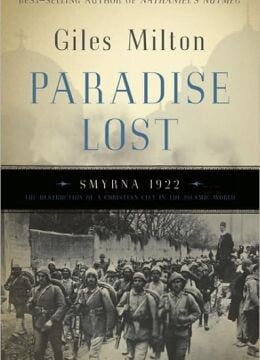
The literature in the English language on various long-established communities eradicated by the horrors of the 20th century is largely dominated by the Jewish holocaust.  Accounts of other disappeared communities—of Italians in today’s Croatia, the Poles of Galicia, the Serbs of the former Habsburg Military Border, or Germans everywhere east of the Oder-Neisse line—are available...

One For the Road
Post

One For the Road

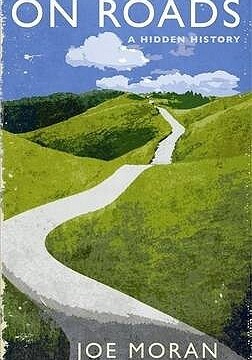
In the summer of 1956, a junior transport minister activated a green traffic light in the middle of a field in Lancashire.  That was the signal for a bulldozer to flatten a hedge and start shifting soil.  In a suitably Monty Pythonesque twist, the bulldozer ran out of petrol a few seconds later. Such were...

Dead Sea Drama
Post

Dead Sea Drama

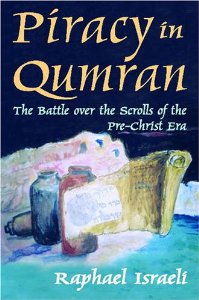
Ever since Marshall McLuhan’s famous review of Northrop Frye’s Fearful Symmetry and Parker Tyler’s Magic and Myth of the Movies in 1947, Western intellectuals have felt obliged to mix traditional scholarship with themes from popular culture.  Needless to say, few could compete with McLuhan’s brilliance and erudition in taking Parry’s and Lord’s theories about the...

A Sum of Contradictions
Post

A Sum of Contradictions

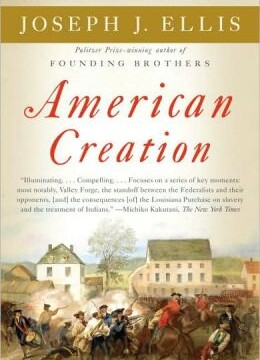
In American Creation Joseph Ellis, a prominent scholar of the American Revolution known for his embrace of the Sally Hemings myth (see “Tom and Sally and Joe and Fawn,” by Egon Richard Tausch, Views, March 1999), shows how serendipitously the American founding actually unfolded, hardly in accordance with the godlike clarity of vision suggested by...

Populist Reveries
Post

Populist Reveries

Mr. Greider is a hopeful man.  Although he believes the United States is in deep trouble, “deeper than many people suppose and the authorities want to acknowledge,” he also believes the country is on the cusp of a second populist uprising, which will force elites to confront the perils of globalism, militarism, economic inequality, ecological...

Cicero’s Legacy
Post

Cicero’s Legacy

Once a believer in the blessings of modernity and classical liberalism, Dutch philosopher Andreas Kinneging now considers himself a “convert” to traditional thinking.  He believes that the Enlightenment and Romanticism have brought “decline and deterioration, instead of progress and improvement.”  Today, public discourse, directed by shallow pragmatists, reveals an historically illiterate ruling class.  “Because we...

Don’t Worry, Be Happy
Post

Don’t Worry, Be Happy

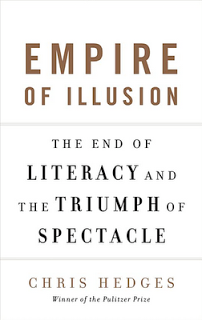
Chris Hedges, a former New York Times war correspondent, is not happy with the current state of American civilization, a view he makes crystal clear in Empire of Illusion.  Hedges is an independent man of the left and a cultural conservative.  Chronicles readers may recall the controversy over his commencement address in 2003 at Rockford...

A Huge and Healthy Pessimism
Post

A Huge and Healthy Pessimism

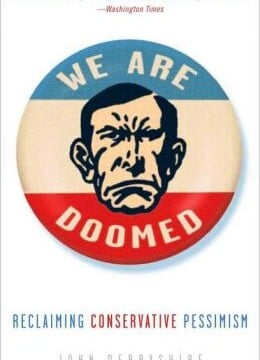
In his splendidly sardonic Devil’s Dictionary, that old gringo Am­brose Bierce defines pessimism as “a philosophy forced upon the convictions of the observer by the disheartening prevalence of the optimist with his scarecrow hope and his unsightly smile.”  Bierce would have smiled—or, rather, frowned—kindly upon John Derbyshire’s new book, an often droll demolition of the...

Nestorius of Constaninople
Post

Nestorius of Constaninople

In 428 AD [sic], Giusto Traina has written a brief and engaging overview of the Mediterranean and Near East in the early fifth century. Traina, an ancient historian with a strong interest in classical Armenia, chose to survey the events of that year owing to its pivotal importance for the political and cultural history of...

The Body’s Vest
Post

The Body’s Vest

Casting the body’s vest aside, My soul into the boughs does glide. —Andrew Marvell (1621-78), “The Garden” Browsing through the poetry section at Borders, I came upon a sole copy of a new book of poems by Fred Chappell, Shadow Box.  I have been an admirer of Chappell’s fiction for years, especially his novel I...

At the Crossroads
Post

At the Crossroads

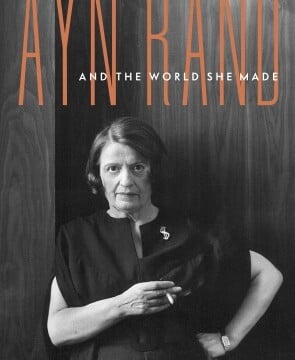
At the Crossroads by Justin Raimondo “No one is free save Jove.”         —Aeschylus Up until now, Ayn Rand hasn’t had a biographer worthy of the name: only the memoirs of embittered ex-followers, or hagiographies written by devotees.  Anne Heller’s Ayn Rand and the World She Made remedies that lack.  It’s the first serious attempt...

Ubuntu!
Post

Ubuntu!

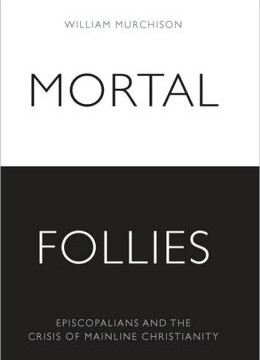
William Murchison gets right to the point in his eloquent account of mainline Protestantism’s near-terminal degeneration, written poignantly from an Anglican’s perspective: Whenever traditional Christianity clashed with late-twentieth-century culture, the Episcopal Church normally weighed in on the side of the culture: for enhanced choice in life, for more laxity and less permanence in belief. Don’t...

A Voice From the Mass Grave
Post

A Voice From the Mass Grave

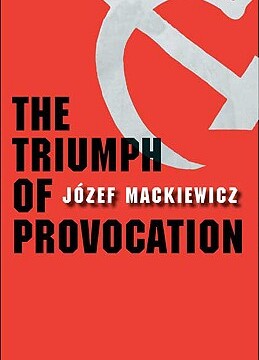
This difficult book has a long history. Zwyciestvo prowokacji was originally published by its Polish author, then a penniless exile in Munich, at his own expense in 1962.  I first read the work in Russian translation some 20 years ago, thanks to the editorial heroism of Nina Karsov, who had brought out a Russian edition...

Waiting for Charles the Second
Post

Waiting for Charles the Second

“How will it be with kingdoms and with kings— With those who shaped him to the thing he is— When this dumb Terror shall rise to judge the world, After the silence of the centuries?” —Edwin Markham, “The Man With the Hoe,” 1899 “A state cannot be constituted from any chance body of persons, or in...

The Duopolists
Post

The Duopolists

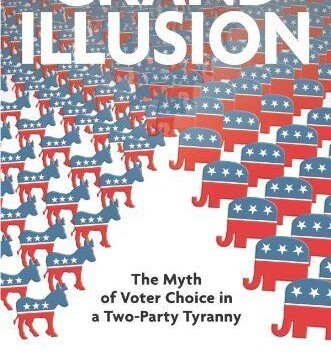
The two major parties, as Judge Richard Posner writes, “exert virtually complete control over American government.”  They are what economists call a duopoly.  Does the duopoly do a reasonable job of presenting candidates the people want?  Is there any hope of electing a candidate favored by a majority of the American people?  To find out...

A Transformational President
Post

A Transformational President

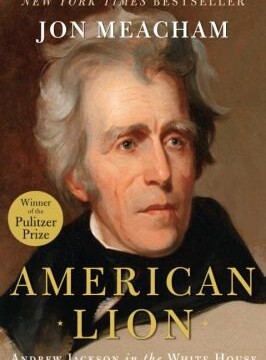
Jon Meacham, editor of Newsweek, portrays Andrew Jackson as one of America’s transformational presidents, including him in the company of Lincoln and the two Roosevelts.  He highlights the crucial events that took place during the 17th president’s two terms in office (1829-37), maintaining that three of those incidents effectively define him.  The first (and foremost)...

Don’t Give Up the Ship
Post

Don’t Give Up the Ship

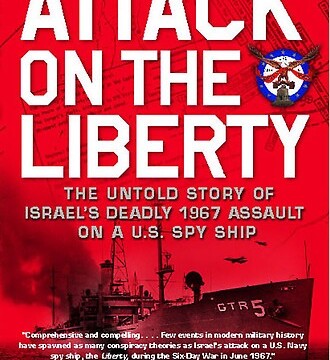
From two until almost four o’clock on a sunny afternoon in June 1967, in the Eastern Mediterranean, Israeli jets and motor torpedo boats mercilessly pounded the virtually defenseless U.S.S. Liberty, killing 34 sailors, seriously wounding 171 (two thirds of the crew), and leaving the ship with a nine-degree list and a huge torpedo hole in...

It’s the Culture, Stupid!
Post

It’s the Culture, Stupid!

“Karl Marx was a mighty prophet.” —George Bernard Shaw Following the failure of the neo-con-laden Bush administration and the neo-con-led McCain campaign, it is clear that whatever the American right is doing is not working.  A variety of authors have offered a variety of explanations to bewildered American conservatives of what went wrong and where...

Kultur Ohne Gott
Post

Kultur Ohne Gott

I began this novel, set in Germany between the two world wars, after watching Valkyrie.  I found the film both shallow and grandiose, dominated by clicking heels and clashing chords; the choice of Tom Cruise to play Claus von Stauffenberg was singularly inept.  Cruise is a Hollywood celebrity; the personality of Stauffenberg—an aristocrat, soldier, and man...

Supernova
Post

Supernova

“Nobility is the symbol of mind.” —Walter Bagehot In times of texting and sexting, Twittering and wittering, there is something positively antediluvian about epistolary collections—a whiff of fountain pens and headed notepaper, morocco-topped escritoires in long-windowed drawing rooms looking out over lawns studded with cedars and peacocks.  Such fleeting evocations are lent depth and body...

Homogeneity Was Our Strength
Post

Homogeneity Was Our Strength

“Diversity enriches education,” then-presidential-candidate Barack Obama commented in a Q&A session with The Chronicle of Higher Education.  Students should be “exposed to diversity in all its forms,” and affirmative action is the vehicle to guarantee this goal.  Contrary to the expectations of naive commentators who hoped we had entered a new epoch, the election of...

A Gentleman’s Badges
Post

A Gentleman’s Badges

“Truth is stranger than fiction.”  This commonplace is abundantly illustrated by the life of Pierre-Augustin Caron de Beaumarchais (1732-99), the young Paris watchmaker who is most famous for his plays The Barber of Seville and The Marriage of Figaro.  From the facts of his extraordinary career, more than one lively novel could be drawn, including...

Wallow in the Mire
Post

Wallow in the Mire

One of the less appreciated perils of literary fame is the risk a writer runs every hundred years as the anniversary of his birthday approaches.  This year marks the 200th birthday not only of Darwin but of Lincoln, a completely irrelevant coincidence that inspired Smithsonian—the trivializing newsletter of “the nation’s attic”—to celebrate the two men...