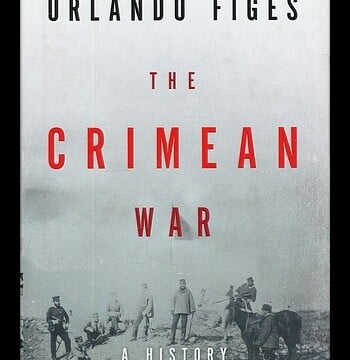
Orlando Figes’ new book does much to shed light on a conflict long neglected by contemporary historians and is likely to become the preeminent work on the Crimean War. However, the book suffers from serious shortcomings that prevent it from becoming a military history of such caliber as Antony Beevor’s and Max Hastings’ works. Figes...
Category: Reviews
Unspoken Questions
We live in interesting times. In June of this year, the U.S. national soccer team played an “away” game against Mexico—in Los Angeles. Many of the 93,000 fans in the Rose Bowl booed the U.S. squad, chanted obscenities directed at the U.S. goalkeeper, and blew air horns during the U.S. national anthem. After Mexico won...
Immodest Proposals
Some 20 years ago at my alma mater, Lawrence Cunningham, now a professor of theology at Notre Dame, began a colloquium by asking the audience why the institution of the university exists. The audience offered suggestions such as “to prepare a trained workforce for the modern economy” and “to bring about social justice.” The professor...
Partisan Revisionism
Richard Miles presents a new history of Carthage, which aims to show the land of Dido and Hannibal in a new light and rehabilitate the Punic state from what the author considers neglect and prejudice on the part of later historians. Miles especially succeeds in his descriptions and analysis of the military history of Carthage...
The Seedbed of Renewal
Many people who consider themselves conservative are woefully ignorant of the culture they claim to defend. The list of causes is long: Television has largely destroyed storytelling, public school denigrates the idea of a common culture, and the internet has killed off lingering remnants of community. The music industry has replaced popular songwriting and songmaking...
A Sentimental Education
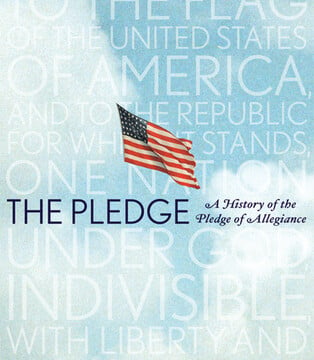
Many Americans probably think that the Pledge of Allegiance dates to the time of the American Revolution, but it was written more than a century later, in 1892. They might be shocked to learn that it was written by a Christian socialist, and the sanctifying words “under God” were not added until 1954. But they...
Sold, Not Bought
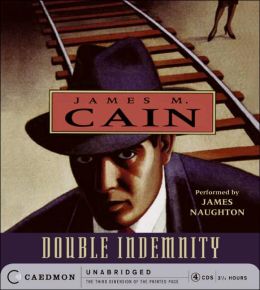
If you want to understand our current financial woes, skip the economists and go directly to the premiere analyst of the Great Depression, James M. Cain. His 1943 novel Double Indemnity (originally a 1936 serial that ran in Liberty) explains far better than spreadsheets the moral origins of our present financial misadventure. Cain once remarked...
Medieval Modernism
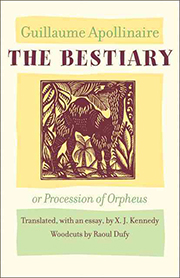
Unlike certain 19th-century poets of difficult character or seemingly foredoomed, whom Paul Verlaine called maudits (accursed)—Rimbaud, Gérard de Nerval, Corbière, Verlaine himself—Guillaume Apollinaire (1880-1918) was a pleasant, cheerful fellow. He, too, suffered misfortune, including illegitimate birth and absence of a father, unrequited love, wounding in the Great War, and premature death during the influenza epidemic...
Maltese Delights
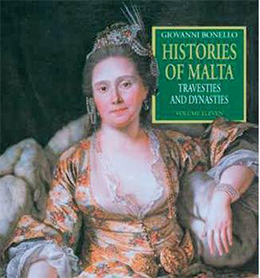
Those who were struck by the graceful prose and clear thinking of Judge Giovanni Bonello’s decision in the case of the Italian crucifix (see “Keeping History,” Cultural Revolutions, July) should be interested to learn that he has for some years had a sideline in the brief historical essay. Many of these have found their way...
Limited Hangout
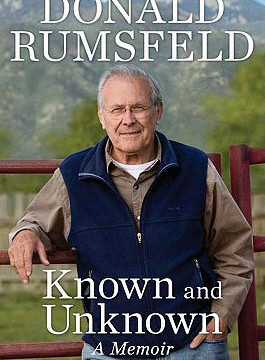
Donald Rumsfeld has produced, four years after his departure from government, a memoir of no stylistic distinction. It contains few if any interesting revelations, save, perhaps, those relating to President Nixon’s choice of vice presidents. For what it does contain, it is at least twice as long as it should be. There is a great...
The Monism of Perfection
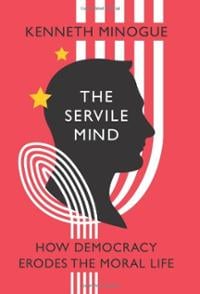
I first encountered Kenneth Minogue as a sophomore at Columbia, when his name appeared on a reading list for a course in modern political philosophy. The professor, it goes without saying, was a radical who had his own reasons for disliking liberalism, but I do not recall his criticisms, if any, of Minogue and his...
Bungalow Minds
They are cutting hay in the Haymarket. A woman is laying out clothes to dry on the grass of Aldgate, and stags patrol where St. James’s Park will be one day, staring in puzzlement at the vast abbey protruding above the willows of Westminster. It is London as delineated by Ralph Aggas circa 1590, reproduced...
White Like Me
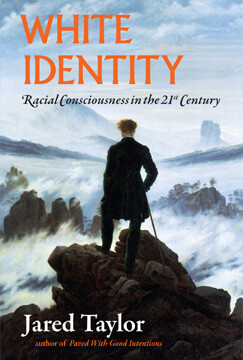
Few men in America are as reviled by the liberal establishment as Jared Taylor, editor of American Renaissance. According to the Southern Poverty Law Center (SPLC), he is “a courtly presenter of ideas that most would consider crudely white supremacist.” Keep in mind that the SPLC is an organization that cites Thomas Fleming, editor of...
Anglo-Saxon Reality
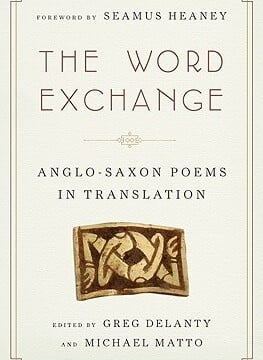
Some poems in Celtic languages are older, but the earliest sizable body of vernacular literature in Europe is the Old English, dating, by liberal estimation, from the seventh century to the twelfth. It is of very high quality, especially the verse. Altogether, these heroic monologues, Bible paraphrases, riddles, battle accounts, saints’ lives, prayers, religious allegories,...
Calvinism Without God
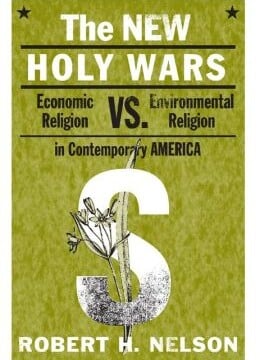
Forget the “culture wars” and the assault on Christianity. The real conflict in America is thoroughly secular—between environmental and ecological “religions”—or so says Robert Nelson. He makes the argument, long known to conservatives, that religion never really goes away. Modern secular religions, like these two, borrow heavily from the Christian tradition. As such, they inherit...
Late in the Day
This fine first collection of poems from William Bedford Clark, the renowned Robert Penn Warren scholar who, as the back cover announces, “abandoned poetry as an undergraduate” and returned to it “in late middle age,” is a triumph of elegant formalism. This volume—which ranges widely in form and motif, from the sacred to the profane,...
Experiencing the Horse
As coincidence would have it, I was rereading Historical Reason, a collection of lectures by José Ortega y Gasset, for the first time in over a decade and a half when John Lukacs’s latest, The Future of History, fell onto my desk. While Lukacs’s debt to Ortega has always been clear (indeed, I first read...
Thunderbolt Kid
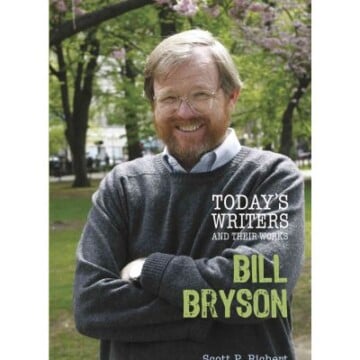
With this book, Chronicles’ capable executive editor contributes to a series for teenagers—seventh grade and older, says the publisher’s website—on successful contemporary writers who have some literary cachet. Since his style in the book is as limpid and straightforward as that of his monthly column, The Rockford Files, it seems that at least one children’s...
New Tricks
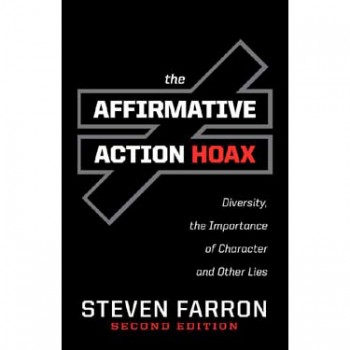
Steven Farron, who earned a Ph.D. at Columbia University and was a professor of classics for many years at the University of the Witwatersrand in Johannesburg, South Africa, has produced a masterly volume on the thorny subject of what is euphemistically termed affirmative action. It doesn’t seem that an article, a book, or a collection...
At the Moral Front
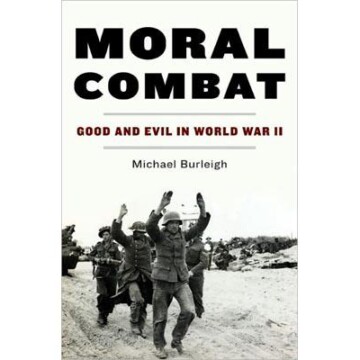
Michael Burleigh’s new history of World War II is the latest in a seemingly endless procession of works on that subject. Antony Beevor, Max Hastings, Norman Davies, and Rich Atkinson have all produced well-written and well-received histories of the war, and the reader is justified in questioning whether there is need of yet another one. ...
A Unifier at Number Ten
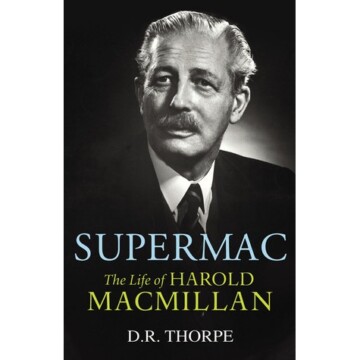
This is a state-of-the-art British political biography. D.A. Thorpe has written biographies of Home, Eden, and Selwyn Lloyd, as well as shorter studies of Lord Curzon, “Rab” Butler, and Austen Chamberlain. His knowledge of the principal political actors, particularly on the Conservative side, is prodigious; he convincingly claims to have interviewed “all the prime ministers...
The Robot’s Focus
By the time Tony Blair stood down as prime minister to give his rival Gordon Brown the opportunity to lose office ignominiously, he had become as unpopular on the left as he had always been on the right. A Journey is his attempt to explain himself, not so much to what he calls, alternately, “the...
A Need for Stewardship
Sissinghurst, in the Kentish part of the Weald, is the estate that prose author and poet Vita Sackville-West bought in 1930 after it became clear she would not inherit the lease on Knole, her family property. (It went instead to an uncle.) Though Sackville-West is notorious for her liaisons with Virginia Woolf and Violet Trefusis...
A Southern Foison
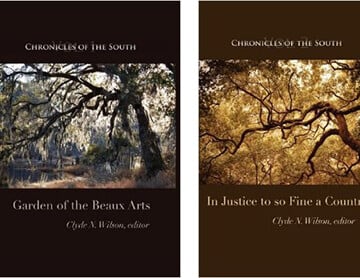
In the Introduction to the first of these two volumes, Clyde Wilson allows, after a few paragraphs of justified complaint against the wholesale academic and political assault on Southern identity as well as Southern culture, that it was not always thus. “Southerners were seen as different and perhaps a little quaint, but tolerated as Americans.”...
The Whale in Times Square
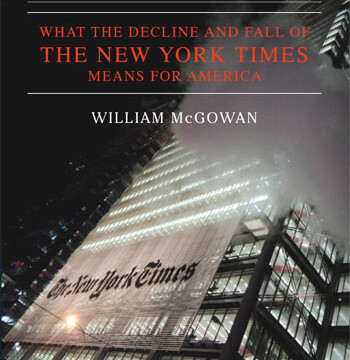
It is the contention of William McGowan that the once august New York Times, our “newspaper of record” (for lack of an alternative), has become a politically correct sheet. He blames the nepotistic reign of Arthur Sulzberger, Jr., who inherited the publishing mantle in 1991 upon the retirement of his legendary father, Arthur O. “Punch”...
Truth in Memory
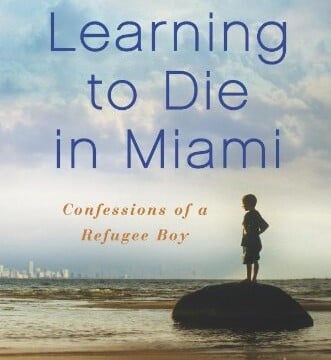
In 2003, Carlos Eire, the T. Lawrason Riggs Professor of History and Religious Studies at Yale University, published a memoir of his Cuban boyhood, Waiting for Snow in Havana. In a review of this book that appeared in The American Conservative, I suggested comparison with The Last Grove, the Spanish poet Rafael Alberti’s autobiography, or...
A Convergence of Catastrophes
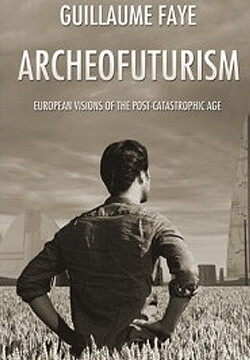
The catastrophic “imaginary” (as the postmodernists might say) is alive and well. Haunted by the falling Twin Towers, we imagine still more horrific scenarios to come: dirty bombs, perhaps, reducing our cities to rubble and befouling the air of the countryside with invisible clouds of lethal radiation; or dust bowls spreading like New World saharas...
Paris Personified
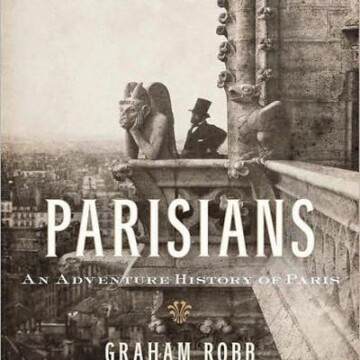
In an established literary conceit, houses become people, and people become houses: Roderick Usher and the House of Usher, Quasimodo and Notre Dame. Similarly, people become their cities, and cities their people. Parisians is not an “important” book like Graham Robb’s magisterial work of the historians’ art, The Discovery of France. But it is indisputably...
The Exceeding Asp
Cleo: “Freely lay you your hands upon me, / Yet prudence mandates stern decorum / Lest impassioned, you should spill the wine” (The Oenophiles, I. i, 1-3). Cleo: “No matter how thin you slice it, it’s still / Baloney; yet well accords it with this vintage” (II. iii, 79-80). Ant: “At what hour openeth the...
The One and Indispensable
When Bill C. Malone’s Country Music, U.S.A. first appeared in 1968, it was obviously the most careful, well-researched, judicious, and accessible book on any kind of American popular music, including jazz, that had been published up to that time. Three revisions later, and a passing of the torch by Malone to a successor charged with...
Bruised Reeds
In his Introduction, journalist Peter Seewald, who talked to the Holy Father over several hours at Castel Gandolfo for this book, points out that it is the first time a pope has engaged in such a personal interview. Although Seewald’s questions appear at times a little convoluted and repetitive, he can rightly take credit for...
A Life Rediscovered
ISI Books, the publishing arm of the Intercollegiate Studies Institute, is doing a great service by putting out the Lives of the Founders series, emphasizing “important but unjustly neglected figures of the American Founding.” Leaving aside for a moment the problems inherent in thinking about the last quarter of the 18th century as an “American...
The Elusive Conflict
Of the making of Civil War books there shall be no end. There are so many, most of which cover the same bloody ground in much the same slogging way, without any new insight or contribution. To make matters worse, American historians have rewritten the war as a simplistic moral melodrama between the forces of...
Something Serious At Stake
In his prefatory essay to the premier issue of First Things in March 1990, editor Richard John Neuhaus stated that the purpose of the journal would be to discuss the relationship between “religion and public life.” Pastor Neuhaus also said that the journal might have been defined as a journal of religion and culture, culture...
Getting Here From There
If you can remember the 1960’s, the old line goes, you weren’t really there. “There,” of course, means the counterculture represented by Woodstock, hallucinogenic drugs, antiwar protests, and Haight-Ashbury. “The 60’s” didn’t actually begin in 1960, but by the “Summer of Love” in 1967 they had clearly arrived. The Beatles eventually became counterculture icons while...
Philosophical Arcs
This lovely chapbook by Catharine Savage Brosman, poetry editor of Chronicles, offers a delightful collection of 20 poems from a small south Louisiana press. Many of the poems feature familiar Louisiana landscape and avian life. All in some way address the underlying ties between nature and art, their metaphysical underpinnings: an order perceivable in natural...
European Union
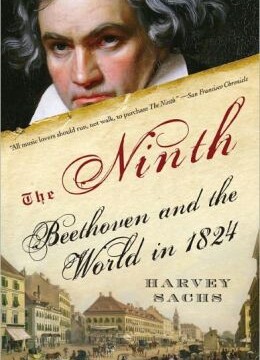
Sometimes short books on great musicians markedly surpass longer ones. Aspects of Wagner, by British philosopher and ex-parliamentarian Bryan Magee, provides a much better guide in its 112 pages to the Master of Bayreuth than do most other Wagner-related books of seven times the size. Similarly, Edmund Morris’s 2005 Beethoven: The Universal Composer (256 pages,...
Picking Up the Pieces
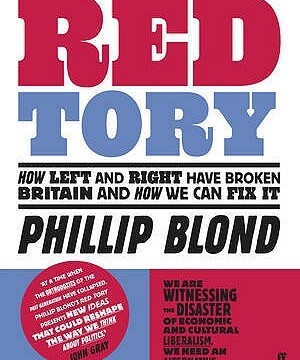
Great Britain is in trouble—politically, economically, and culturally—and Phillip Blond wants to change this. He blames both the political right and the left for having created an atomistic society in which all pursue self-interest to the detriment of society as a whole. Blond explains how Britain got into this predicament and then gives several chapters...
Annus Horribilis
The year 2010 was a depressing one in the foreign-policy world; the decline and fall of a world empire, no matter how well-deserved its fate, should be seen only as a tragedy. The sheer scale of its fatal gigantism portends a Stentorian scream as it falls into the abyss—and we heard the first painful groans...
A Self-Contained World
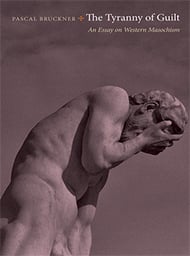
Pascal Bruckner is a French version of the Cold War liberal, updated for the age of jihad. In general, his views would be at home in blue-state America. He is pro-E.U. and pro-affirmative action, takes a more positive view of the free market than is common in France, is generally pro-Israel and pro-American, and favors...
A Holy Craft
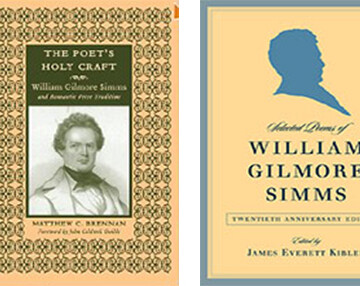
The opportunity for a reconsideration, indeed a reconstruction, of literary history is, in the case of William Gilmore Simms’ poetry, both enticing and rewarding. In Matthew Brennan’s analytical volume, we find the basis, fully elaborated, for reengaging with a body of work, the worth of which has only recently been reevaluated. William Gilmore Simms (1806-70)...
The Coming North American Order
Most of what we see and read from the government and its media organs are variations on a tired but persistent theme of irreversible progress toward utopia. (William Pfaff has a new book arguing that secular utopianism, even more than war profiteering or career advancement, is what drives U.S. foreign policy, making it impervious to...
Back to Hamilton
The credit bubble, which exploded in September 2008, exposed the fact that the U.S. economy has been devastated by globalism. Unemployment numbers—effectively close to 20 percent, about 25 million out of a workforce of 120 million—are near Depression levels. The figures have not moved despite the Bush and Obama administrations’ policy of borrowing and printing...
World of War
With the two brief exceptions of Baghdad and Spain over a millennium ago, the history of Islam has been that of a long decline without a fall. What started as a violent creed of invaders from the desert soon ran out of steam, but the collective memory of earlier successes lingered on as proof of...
Happy Warriors
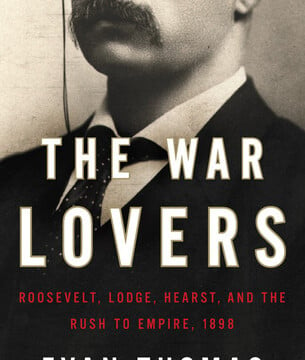
Readers of The War Lovers, a fascinating account of the dawn of America’s imperial age by Newsweek reporter Evan Thomas, are bound to feel a twinge of déjà vu as they put down the book. Focusing on three men—Theodore Roosevelt, Henry Cabot Lodge, and William Randolph Hearst—Thomas shows how they collaborated to usher in America’s...
Cold War, Warm Friends
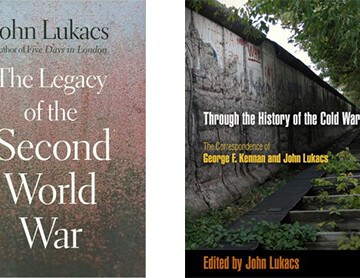
The legacies of every war include controversy regarding its origins, its prosecution, its conclusion, and its material and political results. In the case of World War II, John Lukacs argues that among its major legacies was the Cold War, whose cause was the rigid division of Europe agreed upon by Winston Churchill and Joseph Stalin...
Anarcho—Utopia Revisited
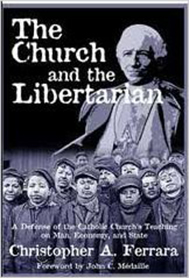
Several years back, I was a contributor to the eponymous website of Lew Rockwell, founder of the libertarian Ludwig Von Mises Institute at Auburn University. In addition to publishing my syndicated column, the site also permitted me access to its blog. One day, in a blog post, I denied a dogma of Austrian economics, that...
Our Aboriginal Future
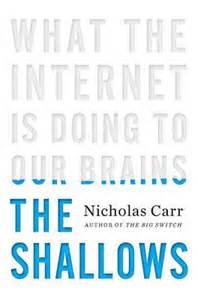
Our ancestors, who lived in the forest, never had a moment’s peace. The forest spoke to them, ordered them about, punished or rewarded them, as their descendants would say now, 24/7. Every movement of the stone, every crack of the bough, and every cry of the bird had a meaning, and the meaning was largely...
Always Something to Say
There are very few neoconservatives, people disagree on who they are, and they have no popular following or definite organizational structure. Even so, they have deeply affected American public life for 40 years. Their influence has not gone unopposed. The term neoconservative began as an insult and remains one. Opponents tie the tendency to foreign...
A Grand Missed Steak
Professor Stauber is not the first man I ever heard of who has suggested that the American Revolution was a mistake. Sigmund Freud thought that America herself was a mistake and made no distinction about the Revolution, but then he was a Sigmund-come-lately. And that makes Professor Stauber a Leland-come-lately, come to think of it. ...