Stephen Glain, a former Middle East correspondent for the Wall Street Journal, joins a long list of journalists, pundits, and think-tank analysts who have endeavored, since the World Trade Center attacks, to help America understand the Arab world. In his first (and, so far, only) book, he argues that the relationship between economics and political...
Category: Reviews
Genuine Outrages
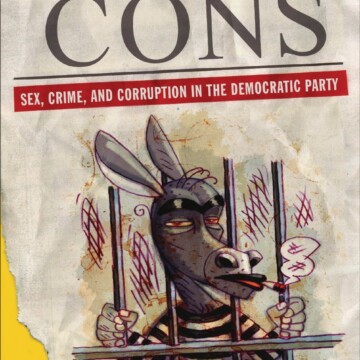
I admit to being a biased reviewer. Donkey Cons is a book about the Democratic Party, and I will say up front that I don’t much care for the Democrats. Consider a sorry, random list: Kennedy (pick one), Pelo-si, Schu-mer, Clinton (pick one), Dean, Kerry, Lieber-man. The names alone are enough to turn one’s stomach. There...
Republican Rapture
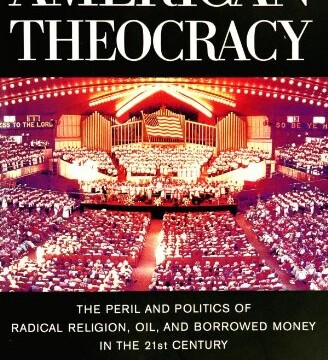
Kevin Phillips’ American Theocracy is divided into three parts held together, at times, only by the most tenuous of rhetorical threads. The first deals with the perilous politics of Big Oil and American imperial overreach; the third, with the looming threat to American prosperity represented by out-of-control national debt and what Phillips calls the “financialization...
Right Deserves Might
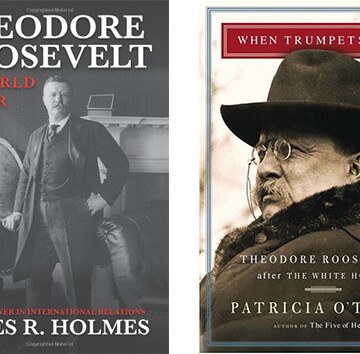
“A combination of St. Paul and St. Vitus.” —Ascribed to John Morley The world could use a few more volumes devoted to Grover Cleveland; it has little need for more books about Theodore Roosevelt. But if more there must be, at least the two under consideration here explore terrain not yet strip-mined. Patricia O’Toole begins...
The Reign of Grantham
“The results of political changes are hardly ever those which their friends hope or their foes fear.” —T.H. Huxley Media commentators covering David Cameron’s incumbency as Tory leader have remarked—often gleefully—on how unpopular Cameron’s Labour-like policies are with the “traditional right.” By this, they mean the Thatcherite rump of the party (probably still the numerical...

Our Little Brown Brothers
The History Book Club has done us a good service by reprinting Leon Wolff’s Little Brown Brother, published originally in 1960, before we had learned to be politically correct or had figured out that we were building an empire. In fact, in 1960, most of us had not realized that our foreign policy had been...
Live Free! (Kill Your Lawn)
Americans love their lawns. They spend $40 billion per year—more than the gross national product of most countries—to create the perfect lawn. Taken together, all these lawns would cover the entire state of Kentucky. Lawns are everywhere, from trailer parks and executive mansions to businesses, churches, and recreational areas. American agronomists have created so many...
The Grand Manner
The culture war takes many forms—or, perhaps, we should say that the war has many fronts, and that the musical conflicts arising from this war are significant ones. Thus, we are convinced, when we approach a car that delivers a pounding reverb of bass, that the driver is not only cultivating a hearing loss that...
Ariadne’s Ball
There are innumerable topics of historical study, but an historian has, I believe, to choose among three styles of history. The first, seemingly the most popular among academics these days, concentrates on facts (i.e., physical evidence). The difficulty with this history is its avowed loathing of any interpretation of the facts by the historian; the...
A Government We Deserve
“A democracy, when put to the strain, grows weak and is supplanted by oligarchy.” —Aristotle The Rise of American Democracy: Jefferson to Lincoln by Sean Wilentz New York: W.W. Norton; 1,004 pp., $35.00 To write a book about democracy, a word that functions today as little more than an advertising slogan, an author should first...
Government by Judiciary
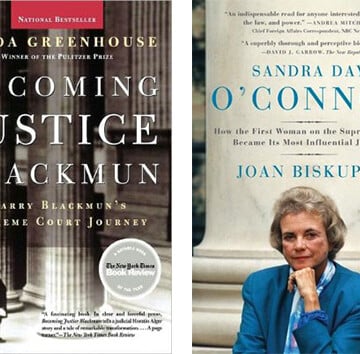
The two most prominent newspaper journalists covering the U.S. Supreme Court have written biographies of two of the most prominent justices of our time. Predictably, Linda Greenhouse of the New York Times, who has written Becoming Justice Blackmun: Harry Blackmun’s Supreme Court Journey, and Joan Biskupic of USA Today, who recently published Sandra Day O’Connor:...
Why the Empire Fell
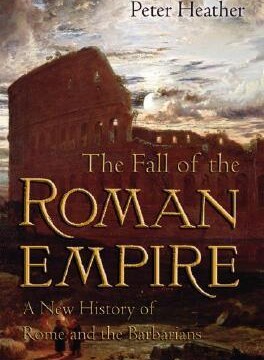
Why do empires fall? Nearly everyone has a theory. Some focus on external challenges. For example, the Soviet Union collapsed under the pressure of the arms race that Ronald Reagan heated up; the British were forced out of India by Gandhi and by the rising tide of Indian nationalism. Others seek the cause in the...
Breaking Ranks
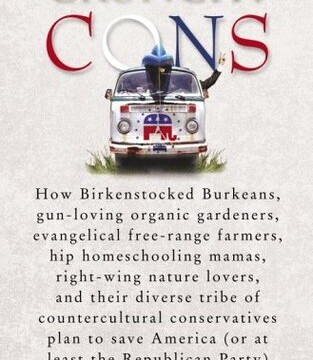
Rod Dreher’s book labors under a few handicaps. First, there is the cloying title and absurdly long subtitle. In addition, the cover features a cutesy picture of a VW microbus with a GOP elephant painted above the grille. The back cover features a “Crunchy Con Manifesto” that is a bit simplistic. “We are conservatives who...
Death on a March Afternoon
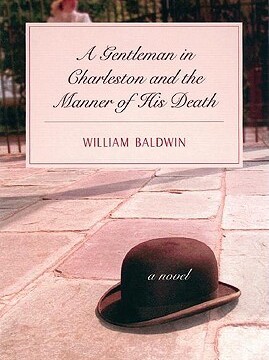
Today, the remarkable life of Capt. Francis Warrington Dawson is little more than a footnote in the history of an era that brought an end in the South to Reconstruction and saw the advent of the “Redeemers” and their Conservative Regime. But in the 1870’s and 80’s, Dawson, founder of the Charleston News and Courier,...
Blue State Mencken
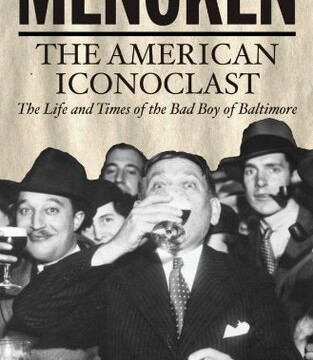
In 1989, a volume of H.L. Mencken’s journals was published. The contents revealed, among many other things, impolite utterances by the Sage of Baltimore about blacks and Jews. (Mencken also sailed into the ways of “lintheads” and “mountaineers,” but that bothered no one.) The denunciations came fast and furious. As I recall, one journalist refused...
A Falling Market
Leon Hadar has written a short, dispassionate, and gently theoretical sort of book on American policy in the Middle East. It is not, chiefly, about military operations, terrorists, prisons, and headlines but about policy at the “geo-political” and “geo-economic level” and about predictions. Though dry, Sandstorm is accessible to the general reader. Hadar believes that the...
Target Hit, No Bull’s Eye
“War is a perpetual struggle with embarrassments.” —Colmar von der Goltz The Assassins’ Gate: America in Iraq by George Packer New York: Farrar, Straus and Giroux; 480 pp., $26.00 George Packer’s The Assassins’ Gate aptly exposes the incompetence of the Bush administration’s occupation of Iraq. The author has traveled to Iraq many times to talk...
The Way Home
Wendell Berry’s latest harvest of essays contains characteristically wise observations on mobility, industrial agriculture, and other maladies of our age, but it also displays a Berry seldom glimpsed—that is, Wendell Berry as a rural Kentucky Democrat reluctant to quit a party that long ago quit rural America. He even titles one short piece “Some Notes...
God, Country, Notre Dame
It must surely embarrass John Miller and the other Francophobic neocons to realize that one of the quintessential American institutions was founded by an intrepid French missionary, who offered this vision for his action: “I have raised Our Lady aloft so that men will know, without asking, why we have succeeded here.” And it is...
The Great Getaway
A friend who sells high-end real estate tells the story of a well-heeled Northern couple who were enchanted by the idea of owning an antebellum Southern mansion. He met them at the airport and took them to one of our charming old South Carolina towns—one that, having failed to be liberated by the U.S. Army in...
The Two Faces of Marxism
I have one major problem with Paul Gottfried’s The Strange Death of Marxism: The European Left in the New Millennium: The title does not really fit the book. Professor Gottfried describes how Marxism as an economic theory has lost its appeal, even on the left, since World War II. Today’s leftists no longer advocate nationalization...
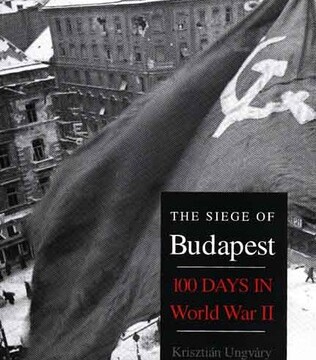
Hell in Panonia
The siege of Budapest in the winter of 1944-45 was not as militarily significant as that of Stalingrad or as colossally wasteful of human life as Leningrad, but it was still a human tragedy of the highest order. For the Germans and their (often reluctant) Hungarian allies, Hitler’s order to defend the capital of Hungary...
No Country for Anyone
The few reviews I’d read of Cormac McCarthy’s new novel, including the lead in the New York Times Book Review, though laudatory, had little more to say than that No Country for Old Men would (will) make a terrific screenplay. So much for the art of book reviewing these days. Another way to say it...
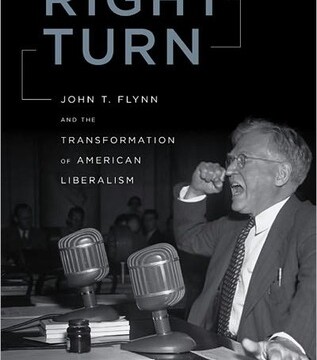
Enemies Right and Left
“Liberalism is too often merely a way of speaking.” —Oscar I. Janowsky Until the day he died in April 1964, John T. Flynn insisted that he was a liberal. Once, that self-designation had not been controversial. This was a man who, as a member of the New York City Board of Higher Education in the...
Later, Not Better
The work of a longtime author on social problems, on the deteriorating relations between blacks and Jews, and on Philadelphia civic life who also served as a Reagan appointee to the U.S. Civil Rights Commission, Murray Friedman’s history of the neoconservative ascent to power is neither scholarly nor balanced. Nor is it a book I...
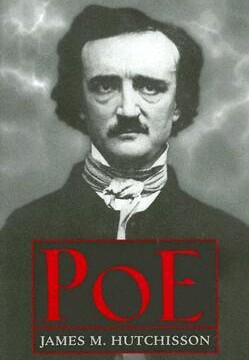
The Virginian
To be published by a university press, one must demonstrate originality of scholarship. In a forgetful age, that is not hard to do. It is easier still when a constant rewriting of history is required to meet the ever-changing dictates of empire. This latest biography of Edgar Allan Poe promises to emphasize “as never before”...
Civis Americanus Sum
“I was born an American; I will live an American; I shall die an American.” —Daniel Webster In the spring of 1963, my sister and I were invited, along with my parents, to a dinner party given by White Russian friends at their penthouse apartment in Manhattan, whose tall mahogany-framed windows overlooked lower Central Park. ...
The State as Rabble-Rouser
Michael Mann has long been the most interesting exponent of what might be called British post-Marxist sociology. In his essays in the Archives européennes de sociologie, his Sources of Social Power (two volumes), and other writings, Mann has applied a four-power model (ideological, political, military, and economic) to historical studies, seeking thereby to overcome Marxist...
An Adversarial Culture
Following the U.S. invasion and occupation of Afghanistan, John Walker Lindh, also known as Suleyman al-Faris and Abdul Farid, got his 15 minutes of fame the hard way. Or perhaps it is more proper to say that he was the object of a Two Minutes Hate by many on the right, even as his arrest...
The Path Not Taken
McClellan’s War: The Failure of Moderation in the Struggle for the Union by Ethan S. Rafuse Bloomington: Indiana University Press; 525 pp., $35.00 Walt Whitman remarked after it was over that “the real war will never get in the books,” and, despite all the volumes that have been written since then, his prediction remains largely...
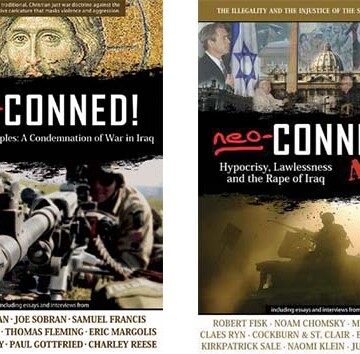
Contra War, Contra Neo-conned
Readers of Chronicles know that the American war with Iraq is worthy of condemnation on many levels. Not only has it continued to earn our country the opprobrium of a number of Middle Eastern nations, and created frustration among many others, but the invasion and occupation of Iraq flies in the face of the classical...
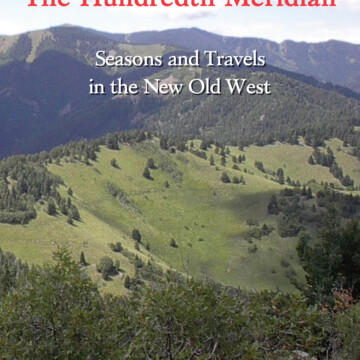
Seasoned Travels
“The land of the heart is the land of the West.” —G.P. Morris Readers of Chronicles are familiar with Chilton Williamson, Jr.’s regular contributions under the title The Hundredth Meridian, a rubric launched in the 1990’s. The first two dozen or so of these columns were conceived as chapters in a serialized book. With minor...
Europe’s Belgian Future
If you plan to read only one book on foreign affairs in the next year, you should read Paul Belien’s A Throne in Brussels. Belien is a lawyer and a journalist, a rare free-market advocate who understands the importance of ethnic identity. On one level, Belien’s book is a ruthless investigation of the history and...
The Road to Ideology
Americans have never been big on “political theory.” In our nation’s early decades—and arguably, up to World War II—folks were comfortable with their republican form of government and its tenets of self-reliance and self-government. However, over the past 50 years, political thought—specifically concerning what the U.S. Constitution actually means—has undergone a radical transformation. During that...
The Good Times Rolled
Almost 50 years ago, William F. Buckley, Jr., made what was undoubtedly the shrewdest and most audacious move of his life. He invited his sister Priscilla to quit her job and join the staff of a magazine he had just started. To appreciate fully the depths of his brotherly nerve, it should be understood that,...
History Is Contemporary
Alex Dragnich’s attempt to compress a multifaceted millennium of Serbian history into 160 pages is bold and could be considered audacious in a lesser man. So much has to be left out, and what is included has to be treated with such economy and such precision, that many a professional would cringe at the task....
Flickers of Resistance
“In the twentieth century you could not see the ground for clever men. . . . And all these clever men were at work giving accounts of what would happen in the next age.” The discussion of prophetic literature with which Chesterton begins The Napoleon of Notting Hill is itself an accurate piece of prophecy. ...
I Would Prefer Not To . . .
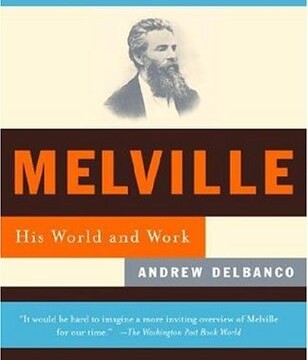
In these biographically minded days, Professor Delbanco has not called his work a biography of Melville—his subtitle does not say “His Life and Work.” I think this distinction is not without significance, particularly because his book takes the form, if not the substance, of a literary biography: It follows the course of an author’s life...
Learning At the Periphery
“Soldiers are the only hope against democrats.” —Wilhelm von Merckel The Bush administration’s crusade to overthrow Iraqi dictator Saddam Hussein and build Iraq into a democratic model for the Middle East has become a highly controversial and divisive undertaking. Larry Diamond was not a supporter of the war in Iraq, but when his old friend...
Roll On, Beethoven
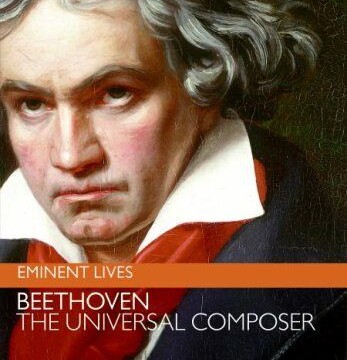
The fate of the famous in this postmodern and even campy time is problematical. The multicultural agenda is not considerate of the distinguished or of distinctions, and “diversity” imposes quotas on what we may be permitted to admire, to enjoy, or even to know. What’s more, “the melting of forms” characteristic of the 20th century...
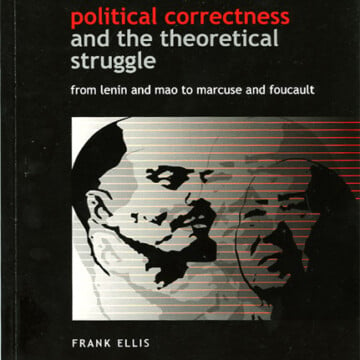
Tremendous Twaddle
There was a time, not long ago, when Britons just laughed at political correctness, seeing it as a Californian cult that no one with any common sense could ever take seriously. Even now, one comes across Conservative politicians who will say that such and such a news story is evidence of “political correctness gone mad”—as...
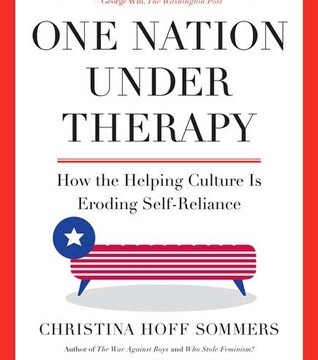
Suffering Narratives
On September 14, as horrifying images broadcast from New Orleans dominated the nation’s headlines, USA Today, citing as its source Charles Currie, head of Substance Abuse and Mental Health Services, reported that as many as a quarter of the Hurricane Katrina “evacuees” would fall victim to Post Traumatic-Stress Disorder (PTSD) and require long-term professional care....
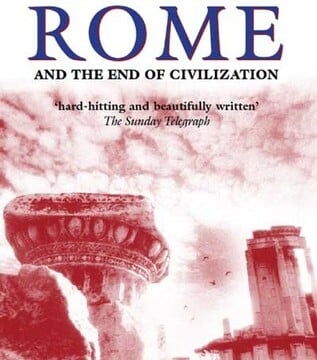
The Cataclysm That Happened
Why did the Roman Empire in the West fall apart in the fifth century? The argument started even before Odovacar forced the German puppet Romulus Augustulus, whimpering, off the stage in 476. When, in 410, Alaric and his Visigoths sacked Rome, old-fashioned pagans immediately blamed Christianity and the neglect of the old rituals for the...
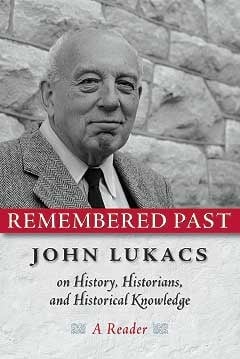
Truth of Blood and Time
Here’s my wisdom for your use, as I learned it when the moose And the reindeer roamed where Paris roars to-night:— There are nine and sixty ways of constructing tribal lays, And — every—single — one—of— them — is — right! —Rudyard Kipling, “In the Neolithic Age” When I was a college student in the...
Out of Harm’s Way
In this factually and conceptually rich biography of French political thinker Bertrand de Jouvenel (1903-1987), Daniel J. Mahoney has at least begun the task that he sets for himself in the Preface: performing an “act of intellectual recovery” to “rectify the unwarranted neglect of one of the most thoughtful and most humane political thinkers of...
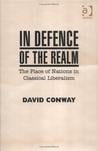
Britain’s Liberal Legacy
One can easily imagine meeting David Conway in the company of Adam Smith or David Hume—an historical conceit that would please him. A quietly spoken, formidably intelligent philosophy professor, he is a senior research fellow at Civitas, the think tank that grew out of the Institute for Economic Affairs—and a very agreeable lunch companion, as...
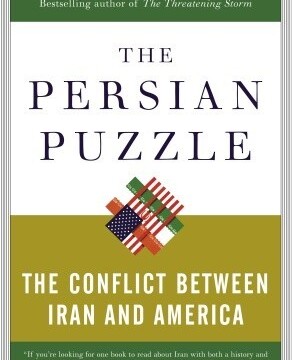
Misinterpreting Iran—and the World
“Learn to think imperially.” —Joseph Chamberlain Imagine that, for a few years, you had been investing the money you had saved for your daughter’s college education in one of those moderately conservative plans that provide some increase in the value of the investment without exposing it to major risks. But then your financial planner—let’s call...

Lessons From Experience
Consider these two premises: First, in 1865, the Confederacy is collapsing, and President Davis, concerned about the funds in the treasury, sends a young naval officer out on a wild expedition to hide the gold, to be used some day to help the South. Second, in 2005, knowledge of the whereabouts of the hidden gold...
Setting History Straight
Having sensed in the 1990’s that most European and American reporting about the Balkans was suspect, I find that this investigative study by a young German journalist, associated with the publication Junge Welt, fills in gaping holes in the received account of a controversial phase of recent history. Contributing to my uneasiness over the establishment’s...
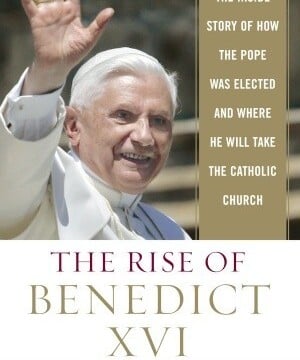
Habemus Papam
In response to the badgering of reporters during the interregnum about whether the new pope would be a liberal or a conservative, Justin Cardinal Rigali of Philadelphia responded that the next pope will be Catholic. With the election of Joseph Cardinal Ratzinger as Pope Benedict XVI, the Church has not only a Catholic pope but...