Category: Reviews

Home Reviews
Art and Artist
Post

Art and Artist

This collection of essays, generally short, on some two dozen authors, chiefly novelists, underlines “the delight of great books,” to borrow a phrase from John Erskine.  It fits the definition that Anatole France (one of the writers treated) gave of literary criticism: “les aventures de son âme au milieu des chefs-d’œuvre” (“the adventures of one’s...
Progress in the Sands
Post

Progress in the Sands

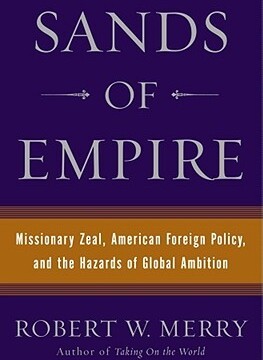
“The mission of the United States is one of benevolent assimilation.” —William McKinley What sets Sands of Empire apart from the growing list of books scrutinizing the Bush administration’s foreign policy is its philosophical ambition.  Where other authors have contented themselves with estimating the neoconservative influence on America’s strategic posture or describing the nation’s slouch...

Gifted Amateurs
Post

Gifted Amateurs

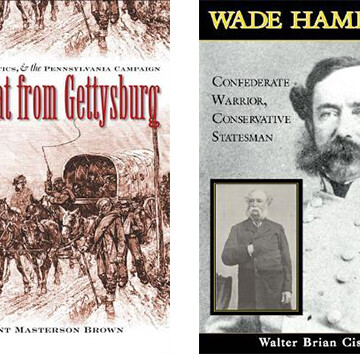
Since they first appeared in the late 19th century, professional academic historians in the United States have been pretty much Establishment men (though, in other days, they did observe some canons of evidence and reasoned argument, and an occasional maverick appeared to remind that historical understanding should be an evolving debate and not a party...

Moscow in Malibu
Post

Moscow in Malibu

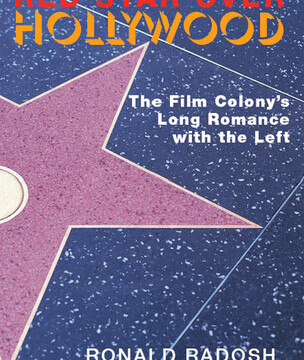
This new consideration of a well-worn subject is altogether justified for two salient reasons.  The first is that Red Star Over Hollywood contains new material and judgment fortified by new research and information; the second, that the topic has been distorted not only by failures of interpretation but by continuing exploitation, even today.  The Radoshes...
The Imperial Trajectory
Post

The Imperial Trajectory

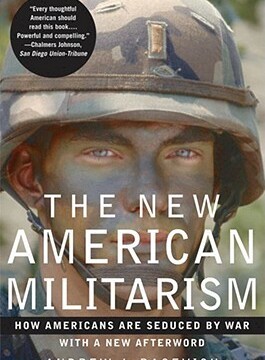
“We oppose militarism.  It means conquest abroad and intimidation and oppression at home.  It means the strong arm which has ever been fatal to free institutions.  It is what millions of our citizens have fled from Europe.” —Democratic National Platform, 1900 Mention militarism, and names that come to mind probably include men on horseback such...
The Party Pooper
Post

The Party Pooper

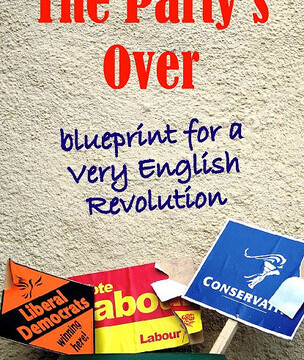
Keith Sutherland is a respected British publisher of such works as History of Political Thought and Polis: The Journal of Greek Political Thought, as well as the executive editor of the Journal of Consciousness Studies.  He has also edited such important collections of essays as The Rape of the Constitution? (2000)—of which compendium Margaret Thatcher...
A Master of His Time
Post

A Master of His Time

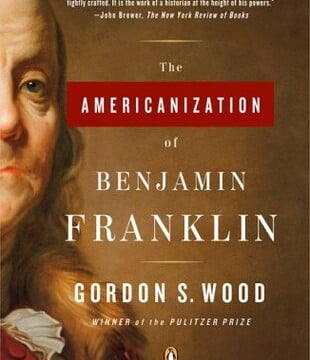
Gordon S. Wood’s Americanization of Benjamin Franklin is a welcome testimony to the renewed interest in America’s Founding Fathers.  Although most Americans have a clear idea as to the importance of Washington’s military role and Jefferson’s contribution in writing the Declaration of Independence, few appreciate the pivotal part Franklin played in legitimizing the Revolution among...
Things That Go Bump in the Night
Post

Things That Go Bump in the Night

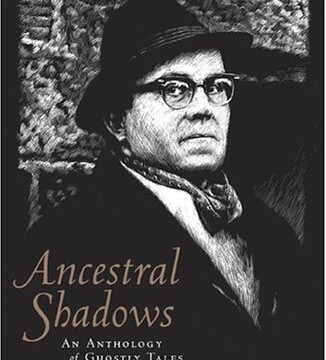
“We are born with the dead / See, they return and bring us with them.” —T.S. Eliot, “Little Gidding” “The philosophical and ideological currents of a period necessarily affecting its imaginative literature,” wrote Russell Kirk in “A Cautionary Note on the Ghostly Tale,” the supernatural in fiction has seemed ridiculous to most, nearly all this...

Twentieth Century Fox
Post

Twentieth Century Fox

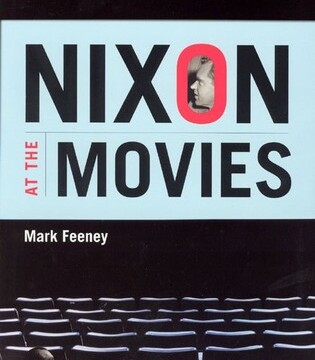
If, indeed, the second half of the 20th century was, in our country, “the age of Nixon,” as Robert Dole declared in his eulogy for the man at Yorba Linda in 1994, then Mark Feeney has undertaken to demonstrate just how that age fits into the larger category of the 20th century itself as “the...

Shoddy Goods, Shoddy Selves
Post

Shoddy Goods, Shoddy Selves

Victor Navasky’s memoirs, which discuss his longtime relation to the Nation and how he came to publish that magazine, create for the reader two misleading impressions before he gets beyond the dust cover.  Contrary to the blurbs of Bill Moyers, Barbara Ehrenreich, E.L. Doctorow, and Kirkus Reviews, this book is neither “elegant” nor “subversive” nor...

Raisonné Dérèglement
Post

Raisonné Dérèglement

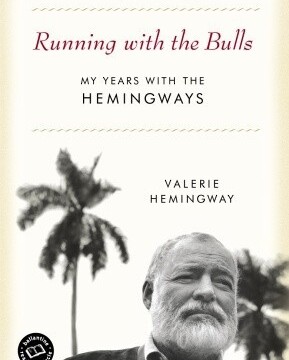
Whether all authorities agree with what is averred here—that Ernest Hemingway was one of America’s greatest writers—is uncertain.  Surely, however, his work constituted a watershed; if his chastened style and objective manner no longer seem striking, it is because subsequent American writing owes so much to him that his originality is disguised.  Prima facie evidence...

The Conservative Cosmos
Post

The Conservative Cosmos

There is no question that the media landscape has shifted seismically in the last two decades.  In the Reagan years, I eagerly subscribed to National Review and the American Spectator; I even sent in an ad from National Review for a magazine called Chronicles of Culture.  Those publications, joined by Human Events and numerous syndicated...

Antiwar Federalists
Post

Antiwar Federalists

The contrast between the importance of the subject of Richard Buel’s new book—New England’s defiance of federal authority during the years of commercial embargo and war with England—and the dullness and conventionality of the narrative reminds us that history is too important to be left to the current occupants of the academy. To enter the...

Felix Culpa
Post

Felix Culpa

This sprawling and densely written 400-page study of Southern political thought, from Old Republicans John Taylor of Caroline and John Randolph of Roanoke down to Whig social theorists (and humorists) John Glover Baldwin and Johnson Jones Hooper—with wedged-in discussions of such other Southern luminaries as Nathaniel Beverley Tucker, St. George Tucker, William Gilmore Simms, and...

Play It Again, Plum!
Post

Play It Again, Plum!

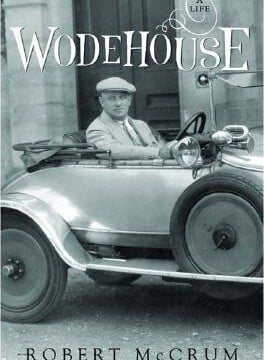
“It has been well said of Bertram Wooster that though he may sink onto rustic benches and for a while give the impression of being licked into a custard, the old spirit will come surging back sooner or later.” —P.G. Wodehouse, The Mating Season Robert McCrum demurs from critical comparisons of P.G. Wodehouse with the...

A Dirge Transposed
Post

A Dirge Transposed

“A novel,” wrote Stendhal, “is a mirror carried along a road.”  In Cyn-thia Shearer’s new book, the road, literally speaking, is that between the invented town of Madagascar, Mississippi, where the action is centered, and Memphis, the other major setting; metaphorically, it is the distance the South has traveled from about 1950 to the early 21st...

The Balkans in Brief
Post

The Balkans in Brief

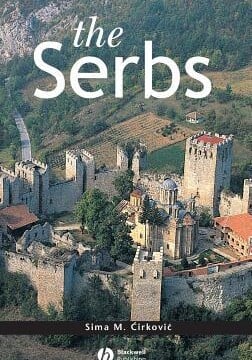
If every man is worthy of a biography (as Johnson suggested), then every people, no matter how small, deserves a decent one-volume history that makes the story of the Bretons or the Armenians intelligible to foreigners.  That is the admirable purpose of Blackwell’s “The Peoples of Europe” series, which presents the “usually turbulent history” of...

Surfing the Void
Post

Surfing the Void

There is a scene in Oliver Stone’s powerful and haunting antiwar film Born on the Fourth of July (1989), in which Ron Kovic’s mother is bending down before the television (this is B.R.—before the remote) and wincing.  It is the Fourth of July, 1969, and long-haired antiwar protesters are surging through the capital with angry...

An Oakeshott for Our Time
Post

An Oakeshott for Our Time

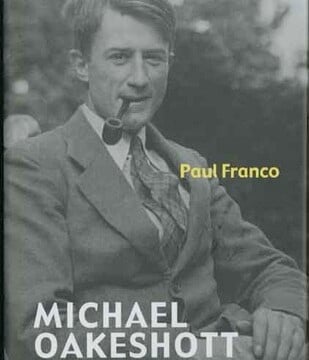
Paul Franco, a professor of government at Bowdoin College, describes his book on English political theorist Michael Oakeshott (1901-1990) as an “introduction.”  That modest claim is fully justified in light of the many volumes on politics, philosophy, aesthetics, education, and religion that Franco’s subject left behind in his productive life of 89 years.  Franco observes...

The Dictator of the World
Post

The Dictator of the World

“E avanti a lui, tremava tutta Roma!” —Victorien Sardou, Luigi Illica, and Guiseppe Giacosa, Tosca At the time of its publication in 1984, John Lukacs’s Outgrowing Democracy: A History of the United States in the Twentieth Century was recognized by discerning critics as a highly significant work combining a fresh originality, at once topical and...

Metaphoric Angels
Post

Metaphoric Angels

Richard Wilbur’s long and distinguished writing career demonstrates that a poet can go against literary fashions, shunning what passes for received wisdom, and still earn critical praise and become an important figure on the literary landscape.  Few of his contemporaries have accomplished even part of what he has managed: to produce work of outstanding quality,...

Citizen Faulkner
Post

Citizen Faulkner

If we wish to understand and profit from a great artist, the essential thing to grasp is his vision, as unfolded in his work.  Much less important is something that, unlike the God-given vision, he shares with all of us—his opinions.  Still, the opinions of a creative writer with the societal breadth and historical depth...

The True Fire Within
Post

The True Fire Within

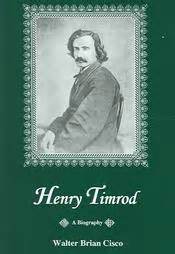
Henry Timrod died in 1867 at the age of 39 from tuberculosis—his end aggravated and hastened by inadequate food and the rigors of eking out a living amidst the charred ruins of South Carolina’s capital city.  The newspaper that had provided the only income for himself, his wife, his child, and his widowed sister’s large...

A Rumor of War
Post

A Rumor of War

George W. Bush’s man at the CIA, Porter Goss, is now purging the agency, an act prompted by the persistence of certain parties in the CIA in presenting the White House with “reality-based analysis.”  Since such analysis presented a road block to war plans, Goss was ordered to rid the agency of “disloyal” employees, meaning...

The Lavender Baboon
Post

The Lavender Baboon

“O comrade lustrous with silver face in the night.” —Walt Whitman I first heard about “brain freeze” from an amiable fellow who was vending Italian ices.  He pointed out that, if the ices were not consumed carefully, the freeze would penetrate the palate into the brain.  In fact, I did experience brain freeze that way.  But...

An Afternoon Man
Post

An Afternoon Man

Anthony Powell has been variously called “the English Proust” and “a master of wit, paradox and social delineation”; Kingsley Amis said, “I would rather read Mr. Powell than any English novelist now writing.”  He was an admired contemporary, friend, or patron of such important 20th-century figures as Graham Greene, Evelyn Waugh, Cyril Connolly, George Orwell,...

Counterrevolutionary Light
Post

Counterrevolutionary Light

Both ISI and Christopher Olaf Blum, who edited this anthology, deserve our thanks for making available in English the six 19th-century French conservative thinkers whose writings are herein presented.  Although these men—François René de Chateaubriand, Louis de Bonald, Joseph de Maistre, Fredéric Le Play, Émile Keller, and René de La Tour du Pin—do not display...

Hicks’ Town
Post

Hicks’ Town

In 1932, Marxist literary critic Granville Hicks and his wife, Dorothy, bought an eight-room farmhouse in Grafton, New York, a rural hamlet ten miles east of Troy, where Hicks taught English to the young engineers at Rensselaer Polytechnic Institute.  For three years, they lived as summer people, aestivating intellectuals, divorced from the community.  But when...

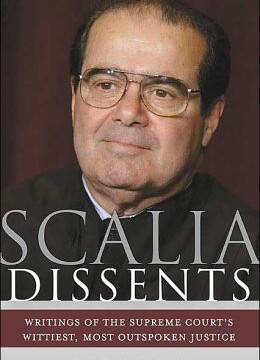
My Favorite Justice
Post

My Favorite Justice

“Every virtue is included in the idea of justice, and every just man is good.” —Theognis John Paul Stevens is the only U.S. Supreme Court justice to have graduated from the law school where I teach; Steven Breyer was one of my law-school teachers; David Souter may be the most adept at arcane constitutional-law doctrine;...

Post

Sunset in the Head

Proust wrote, in Time Regained, that “Style is a question not of technique, but of vision.”  Technique may be said to inform and undergird the style, but the artistic vision has priority: It is the style.  In Charles Edward Eaton’s recent collection, his 17th, comprising new verse (some published previously in Chronicles) and a generous...

Poor Little Victim
Post

Poor Little Victim

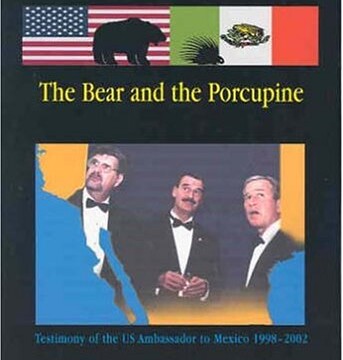
An untimely cold finally gave me a chance to watch The Godfather (I and II)—30 years late, but just in time for fitting juxtapositions.  I spent my down time sleeping, reading news about Mexico’s ongoing narco-cartel bloodbath, and reviewing former U.S. Amb. Jeffrey Davidow’s book, The Bear and the Porcupine.  Most poignant were the similarities...

Room to Pass
Post

Room to Pass

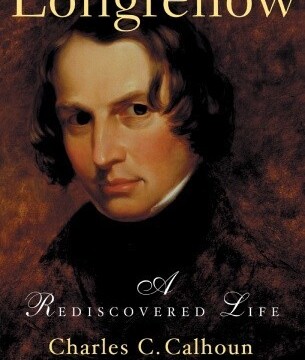
Few people read Henry Wadsworth Longfellow (1807-1882) much anymore.  Lines from his poems were once on the tips of tongues the world over.  Students used to memorize “The Midnight Ride of Paul Revere,” and lines from “Evan-geline” and “Hiawatha.”  Longfellow’s once-great literary reputation rivaled that of Tennyson and Dickens, and, after his death, the American...

Beautiful Terror
Post

Beautiful Terror

“Fame is a calamity.” —Turkish Proverb The face is familiar, but not the gray hair.  To some few, it may be so from Our Gang shorts from the late 30’s and early 40’s, known by the moniker of Mickey Gubitosi.  To others, it is the face of Bobby Blake of “Red Ryder” westerns and Humoresque...

Themselves Alone
Post

Themselves Alone

“Our sympathy,” said Gibbon with his usual acuity, “is cold to the relation of distant misery.”  You do not need to know very much about human nature to agree with the great historiographer that it is often very difficult, or even impossible, to sympathize with the woes of strangers. And if it is difficult to...

Political Romanticism, Utopian Violence
Post

Political Romanticism, Utopian Violence

“This book tells a story about the twentieth century, which has in it a lesson for the twenty-first—one that I would think unlikely to be learned, since it is a moral lesson, concerning the role of virtue in human existence, and we know about moral lessons.”  Thus begins William Pfaff’s incisive and bracing study of...

Playing Poetry With a Net
Post

Playing Poetry With a Net

In the Introduction to his classic anthology of Fugitive verse, William Pratt writes: “Modern American poetry abounds in individualism, but two groups of poets have affected its course profoundly.”  He is referring, of course, to the Imagists and the Fugitives.  Nearly a century after the Imagists first gathered in London in 1909, I wonder what...

Post

The Peculiar Path

A Bavarian legal scholar who has been attached to the U.N. Secretariat and to the E.U. Commission in Brussels, Josef Schüsslburner has disagreements with the German Basic Law, enacted in 1949 as an interim constitution for the West German Federal Republic.  The author describes this guiding document and the circumstances that helped shape it as...

Celtic Thunder
Post

Celtic Thunder

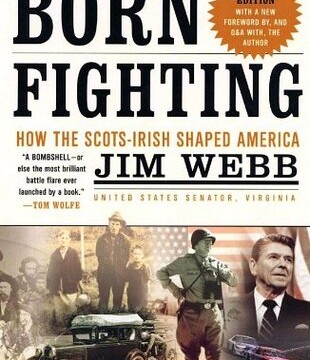
“The Celts fear neither earthquakes nor the waves.” —Aristotle Nearly six years ago, Chronicles published “Death Before Dishonor,” an article I wrote about the westward march of the American pioneer.  Much of the time, I was writing about the Scotch-Irish—or Scots-Irish, if you prefer.  These hard-edged folks were in the vanguard of the movement across...

The War Lovers
Post

The War Lovers

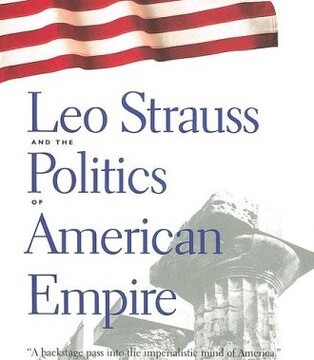
To save precious space in America’s most important journal, I will refer to the subjects of this book as neocons.  To make fine distinctions between academic and activist Straussians, as the author sometimes does, is akin to saying Marx is not to blame for his disciples. Having long admired Prof. Anne Norton for her brilliant...

Who Will Judge the Judges?
Post

Who Will Judge the Judges?

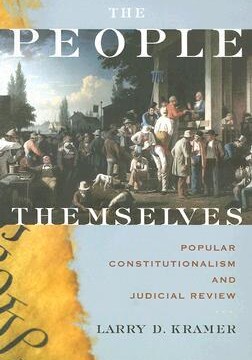
Abraham Lincoln, in his 1860 Cooper Union speech, asked, “What is the frame of government under which we live?”  The answer must be, he said, the Constitution of the United States.  The answer today, as Chronicles’ reviewer of Quirk’s and Bridewell’s Judicial Dictatorship stated in 1995, is a judicial dictatorship imposed by the Supreme Court. ...

Ghosts on the Stairs
Post

Ghosts on the Stairs

“F–k socialism!” —Evelyn Waugh Octogenarian knight Sir Peregrine Worsthorne is famous in Britain for several things.  He was the editor of the Sunday Telegraph and a political columnist for that paper for 30 years.  He is married to the jolly Lucinda Lambton, who presents enjoyable, occasional TV programs on heritage-related topics.  He wears pink bowties. ...

Victims of Pleasure
Post

Victims of Pleasure

I had long since given up on contemporary American fiction, although the Neoformalist movement has reinvigorated my interest in some of today’s American poets.  The last American novelist I really admired was Walker Percy.  And even he never gave us what I had vaguely been looking for: a dramatization of the lives destroyed—or nearly so—by the...

The Art of Scam
Post

The Art of Scam

Roger Kimball, who edits the New Criterion and does art criticism for National Review, has set out to achieve two goals in this thin, concise book: pointing out “the depredations practiced by criticism on art” and aiming “to encourage the benevolent civilizing elements that have traditionally been accorded to our encounters with good art.”  Despite...

Daffodils for Wordsworth
Post

Daffodils for Wordsworth

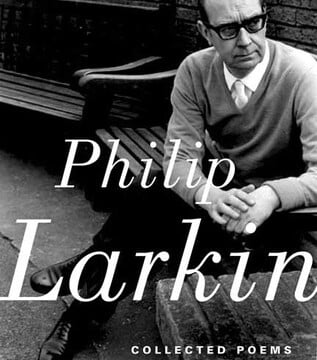
The name Philip Larkin (1922-1985) is a wonderfully poetic one, conjuring an image of a lover of horses on a carefree adventure.  Such, however, is far from the temperament of this 20th-century poet, whose poetry is more suggestive of some horse in a Dickens novel, harnessed to an industrial wheel and moving forever round in...

Post

A Pilgrimage to Jasna Góra

Three Polish nuns, wearing traditional robes and habits, stand in a circle, studying their train schedule.  Little sleep and the absence of coffee on the night train from Berlin contribute to my slow reasoning.  “Can you direct me to the platform for Cze? stochowa?” I inquire.  The eldest nun points to a platform, and then...

The Left-Hand Path
Post

The Left-Hand Path

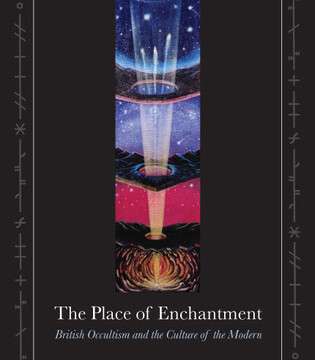
Last May, the New Republic carried an informative article about how contemporary exponents of Cabala, a school of Jewish mysticism dating from the Middle Ages (if not earlier), have shaped the minds (such as they are) of such celebrities as Mick Jagger, Britney Spears, Demi Moore, and Madonna.  The Material Girl herself was quoted from...

Mexico Comes of Age
Post

Mexico Comes of Age

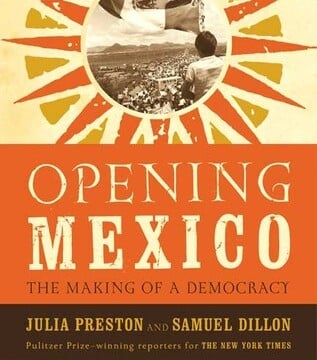
“It doesn’t matter to me if Mexicans make fools of each other; what I will not tolerate is that Mexicans do it.” —Pancho Villa The world remembers the 2000 U.S. presidential election, with its hanging chads, overvotes, undervotes, and esoteric attempts to “discern the intent” of the voter.  Irregularities people thought did not and could...

Ditching the Cadaver
Post

Ditching the Cadaver

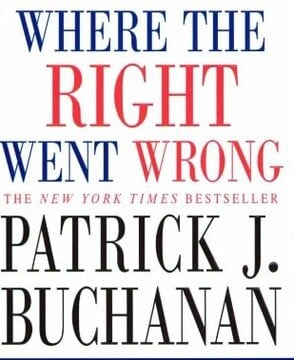
“Republics exist only on tenure of being agitated.” —Wendell Phillips If anything might have transformed the presidential election of 2004 from a dull ritual of mass democracy into an interesting and perhaps even meaningful act of civic decision, it would have been the presence of Patrick J. Buchanan, whose wit and sharp conservative intelligence enlivened...

Where Lawyers Fear to Tread
Post

Where Lawyers Fear to Tread

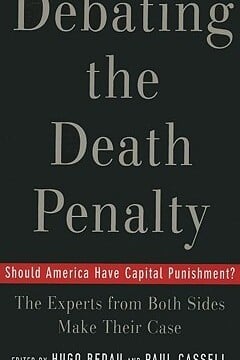
This book was occasioned by former Illinois Gov. George Ryan’s blanket commutation of all death sentences imposed in his state to life imprisonment without parole.  Philosopher Hugo Bedau and U.S. District Judge Paul Cassell have compiled a collection of outstanding point-counterpoint essays from leading members of the academic, legal, and political communities, discussing the validity...

Blame All Around
Post

Blame All Around

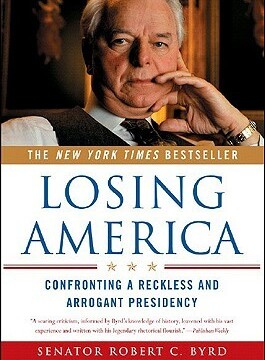
Losing America: Confronting a Reckless and Arrogant Presidency by Sen. Robert C. Byrd New York: W.W. Norton & Co.; 270 pp., $23.95 Robert Byrd is the ultimate political survivor.  He has served in Congress for more than 50 years and has cast more votes than any other senator in American history.  Publicists for the Stupid...