Most Americans think of the terms modern and modernity as denoting something positive. A modern society is advanced in science, reason, hygiene, and human goodness. To condemn modernity is to be against progress and all of its material benefits. Even American conservatives are essentially modern in outlook, identifying modernity with material improvement. European conservatives are...
Category: Reviews
Post
War From a Cabbage Patch
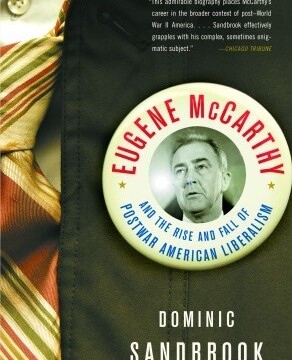
“Gene just isn’t a nice person.” —Bobby Kennedy You know you are not in for a Doris Kearns Goodwin/David McCullough hagiography when a biographer uses as an epigraph a character assessment by the thuggish Marilyn-mauling (Joe) McCarthyite RFK. (Isn’t the three-letter monogram usually a tip-off to a sinister force?) In March 1968, Eugene McCarthy earned...
Post
Red Star at Morning
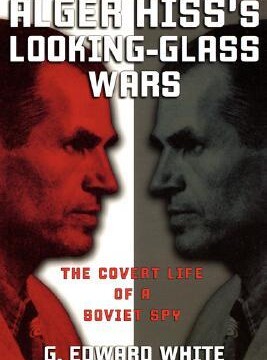
This book, the work of a professor at the University of Virginia School of Law, is an attempt to fathom the Alger Hiss phenomenon by a man whose father-in-law was among Hiss’s defense lawyers from 1948 to 1950 and who remained for years a quiet believer in the innocence of his client. Hiss died in...
Post
The Order of the Silver Cross
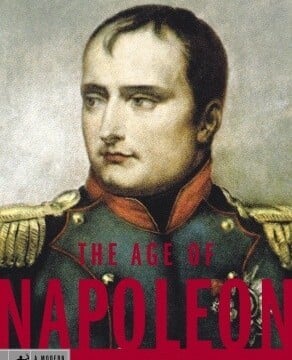
Napoleon rose to power on the destructive wave of the French Revolution. His own synopsis of his remarkable career is succinct—“Corsican by birth, French by adoption and emperor by achievement.” The Age Of Napoleon, by Alistair Horne, seeks to encompass a broader range of the emperor’s achievements in a short volume of 218 pages. Napollion...
Post
The Big Bore of Arkansas
“‘Jour printer, by trade; do a little in patent medicines; theatre-actor—tragedy, you know; take a turn at mesmerism and phrenology when there’s a chance; teach singing—geography school for a change; sling a lecture, sometimes—oh, I do lots of things—most anything that comes in handy, so it ain’t work. What’s your lay?’” —The Duke, Huckleberry Finn...
Post
Sacred Texts ’98
As readers of this delightfully passionate work will infer, the U.S. Department of Education is unconstitutional. Nevertheless, before it does the country a great service by abolishing itself, the department ought to issue a mandate requiring every secondary school in the nation to adopt the next edition of Reclaiming the American Revolution as required reading. ...
Post
The First New Deal
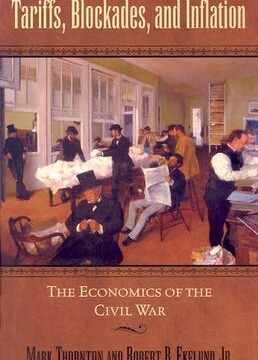
A calm image of businessmen and clerks engaged in the buying and selling of cotton on the New Orleans Cotton Exchange is not what you expect to find on the dust jackets of books about the Civil War. The Edgar Degas painting that graces the cover of Tariffs, Blockades, and Inflation, however, tells the reader that...
Post
Toward the Heavenly City
Eugenio Corti should be well known to Chronicles readers as the author of the terrifying war diary Few Returned and The Red Horse, one of the finest novels of our time and perhaps the greatest piece of Christian fiction published in my lifetime. The Last Soldiers of the King is a very slightly fictionalized account...
Post
Millions for Tribute
That imperial anthem, the hymn of the U.S. Marine Corps, is today somehow an obscure exercise. The halls of Montezuma? The shores of Tripoli? Our gum-popping, Gucci-schlepping youth can no more respond to its referential difficulties than could the Ivy League-credentialed savants of the War Party. What’s more, the pseudopatriots would be shocked to know that...
Post
Dropping the Masks
The 1997 movie Wilde opens with a shot of Oscar Wilde (played by Stephen Fry) being lowered by bucket into a Colorado silver mine, where he recites his poetry and chats with shirtless, sweaty miners, who are obviously thrilled at a visit from such a renowned visitor. I thought it was at least half Hollywood...
Post
Thomas Fleming and Mother Teresa: Undoubted Motives in the Morality of Everyday Life
“Name one.” —Anonymous Too bad that, since 1966, they are no longer adding titles to the Index of Prohibited Books. My more than ten years as diocesan censor librorum—was it this past distinction that gained me the happy task of writing this review?—would lead me to grant Thomas Fleming’s The Morality of Everyday Life: Rediscovering...
Post
The Unlovely Republic
The most respected historian specializing in the Spanish Civil War and the history of fascism, Stanley G. Payne has never hesitated to challenge received opinions in his field. Like his mentor and friend Burnett Bolloten, Payne has been properly critical of the Spanish Republic, the regime against which the Spanish military and much of the...
Post
I.O.U.: $10,000
The Case for Israel by Alan Dershowitz New York: John Wiley & Sons; 264 pp., $19.95 Alan Dershowitz’s brief on behalf of Israel has at least some truth on its side. Had the Arabs accepted the territorial partition arranged by the United Nations in 1947, far fewer of them would today be living in exile; and...
Post
A Living Library of the Law Revived
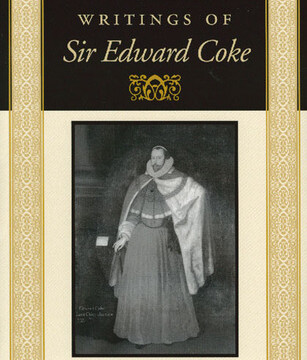
“It is best that laws should be so constructed as to leave as little as possible to the decision of those who judge.” —Aristotle Here Lies Edward Coke, Knight of Gold, of Imperishable Fame, Spirit, Interpreter, and Inerrant Oracle of the Law, Discloser of its Secrets—Concealer of its Mysteries, Thanks Almost Alone to Whose Good...
Post
Politics Versus Culture
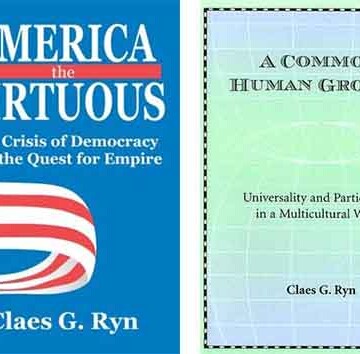
We literate minority still at large here in the Dar al-Harb can learn much from Claes Ryn about our present condition and future prospects. In America the Virtuous, he makes a rigorous and definitive analysis of that phenomenon of “neoconservatism” that has converted the erstwhile American republic into a (self-)righteous empire. Neoconservatism is really neo-Jacobinism,...
Post
The Bloody Quaker
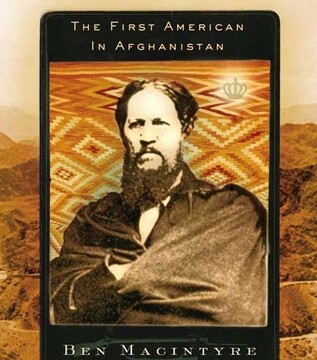
The Man Who Would Be King: The First American in Afghanistan by Ben Macintyre New York: Farrar, Straus and Giroux; 351 pp., $25.00 In recent memory, when we think of Afghanistan, we recall perhaps first the struggle of the CIA-backed mujahideen guerillas against the Soviet invaders. The Soviets lost 50,000 men and eventually their power,...
Post
Americans Before the Fall
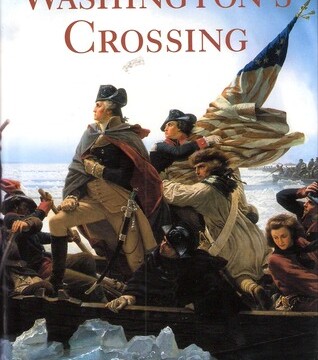
For those of us who love the Old Republic, a new book by David Hackett Fischer is a cause for celebration. His newest will not disappoint the high expectations created by his previous work. Washington’s Crossing is really a successor volume to Paul Revere’s Ride (1994), about the battles of Lexington and Concord and the...

Post
Why Johnny Shouldn’t Vouch
For some time now, the panacea offered by conservatives and libertarians for improving the education of American youth has been vouchers. There is no question that government schools are failing miserably. There is plenty of teaching about the wonders of diversity and multiculturalism, but not enough instruction in the basic skills required for work or...
Post
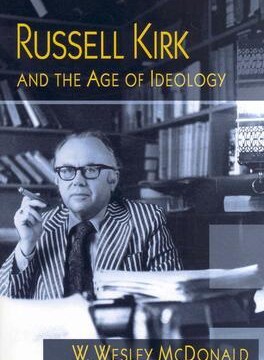
Russell Kirk and the Negation of Ideology
“The magnificent cause of being, / The imagination, the one reality / In this imagined world . . . ” —Wallace Stevens Though ten years have passed since his death on April 29, 1994, Russell Kirk has yet to be the subject of a definitive intellectual biography. In his own posthumously published autobiography, The Sword...
Post
The Dialectic of Suicide
“A nation never falls but by suicide.” —R.W. Emerson The ambush was prepared and actually triggered several months before Samuel Huntington’s Who Are We? appeared in print. When Mr. Huntington, the author of The Clash of Civilizations and a leading political scientist at Harvard, published last winter an excerpt from his new book dealing with...
Post
Cakewalk Through the Sand Dunes
This malignant little book, admirably successful in achieving the difficult feat of combining vapidity with nastiness, further exhibits dishonesty, hypocrisy, flattery, cant, and special pleading, in about equal parts. To this list of sins, we can finally add error—of the grossest magnitude. An End to Evil, though published just a few months ago, is not...
Post
Till Earth Was
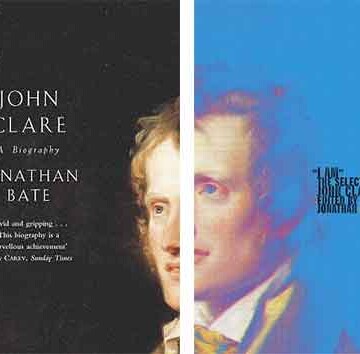
Poet John Clare (1793-1864) seems to have grown from the soil. His last name derives from the word clayer—someone who manures and enriches clay. As a farm laborer, he drew sustenance from the earth. Immersed in humus, he learned the humility so necessary to creativity. His poems, like furrow lines, break the surface of things...
Post
A League of Bushes
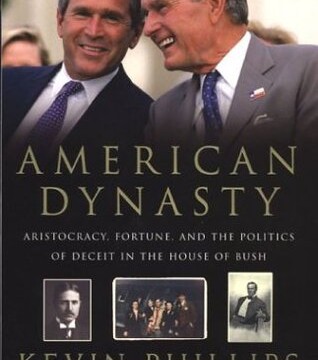
“A politician . . . one that would circumvent God.” —William Shakespeare Initially, Kevin Phillips intended his new book, American Dynasty, to be a study of the Bush-related transformation of the U.S. presidency into an increasingly dynastic office, a change with profound consequences for the American Republic, given the factors of family bias, domestic special...
Post
Fire the Nanny
Even under a “conservative” President, government entitlements continue to grow. President George W. Bush’s expansion of Medicare to include prescription drugs will add billions to the already overinflated budget. And, despite warnings from Alan Greenspan that Social Security is on the verge of default, neither political party is willing to address the issue. Americans have...

Post
As Long as I’m Doing It
Writing—literary creation in the fullness of the sense that we have known it in the previous century and even in the one before, from the French and Russian masters, the daft Irish, the mad Yankees, the haunted Southerners (and from elsewhere, of course)—sometimes seems to be on the way out. Senses of language, of irony,...
Post
A Stand-up Guy
What is Pete Rose’s explanation for failing to remember, throughout his life, his mother’s birthday? “I just can’t seem to concentrate on things I’m not interested in.” Ever since the news broke that Pete Rose was ready, after 14 years of lies, to admit what most people already believed—that, yes, he did bet on baseball—the...
Post
Worrying the Southern Bone
Longtime readers of Chronicles are familiar with John Shelton Reed, who used to write a column for this magazine. Those less familiar may recall the occasional news story based on the latest intelligence-gathering done by the University of North Carolina’s Center for the Study of Southern Culture, which Professor Reed founded. Well-known among his fellow...
Post
Smear Campaign
“The tone and tendency of liberalism . . . is to attack the institutions of the country under the name of reform and to make war on the manners and customs of the people under the pretext of progress.” —Benjamin Disraeli On April 14, 1996, the Washington Post published a 2,700-word article by liberal journalist...
Post
Elephant Amok
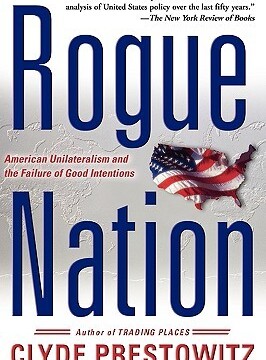
This book joins dozens of others that have been written over the past two years with the goal of subjecting President George W. Bush’s foreign policy to critical scrutiny. Clyde Prestowitz’s objections are often justified—notably on the Middle East—and stated with clarity. His recommended remedies reflect a strong One World liberal bias, however, while failing...
Post
A Brief History of Evil
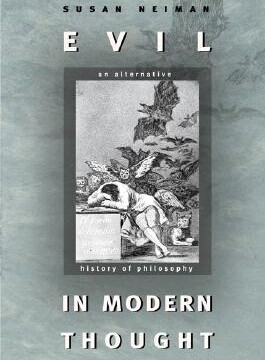
The problem of evil has confounded humans throughout history. Philosophers and theologians have perennially constructed systems and myths to assuage the perception of the contingency of life. Religious belief, at least in Western civilization, usually filled in the gaps between the “ought” and the “is” that conflicted in the minds of those affected by the...
Post
Sailing to Urbino
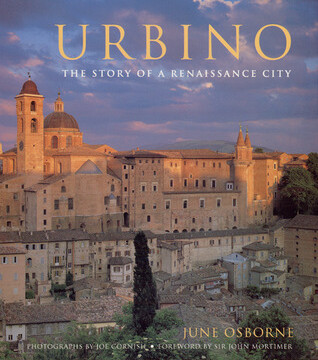
William Butler Yeats was not talking about literally sailing to a literal Byzantium in his famous poem, and I know that Urbino is a mountain fastness, not a port. Even so, sailing to Urbino is necessary, and it does not matter how you do it—only that you do. One way to approach Urbino is through...
Post
Deep as Dante
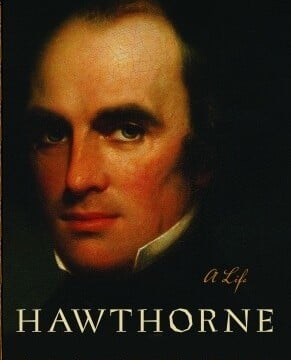
Brenda Wineapple’s new biography of the most brilliant flower of the New England Renaissance reminded me that it was time to reread Hawthorne. She delineated the man very well, got his politics almost right, but barely did justice to his work. Writing in 1847, ten years after the publication of Hawthorne’s first collection of stories,...
Post
Rule Columbia!
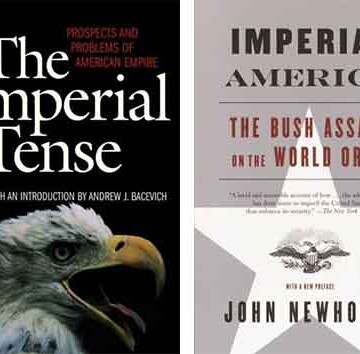
“The Empire is peace.” —Napoleon III If the publishing industry has played any part in the supposed recent economic revival, it can, perhaps, thank George W. Bush. The President’s foreign policy has made it possible to sell thousands of books with the words empire or imperial in the title. Indeed, it sometimes seems as if...
Post
Three Against the World
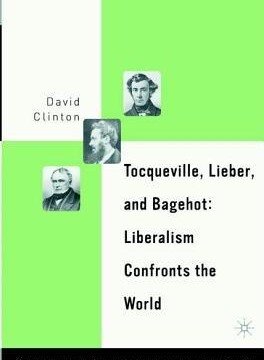
In the political writings of Alexis de Tocque-ville (1805-1859), Francis Lie-ber (1798-1872), and Walter Bagehot (1826-1877), we find insights, opinions, and warnings of great current applicability, especially with regard to international affairs. The task Professor David Clinton sets himself in this excellent study is not, however, primarily to draw conclusions concerning the present but to...
Post
De Oppresso Liber
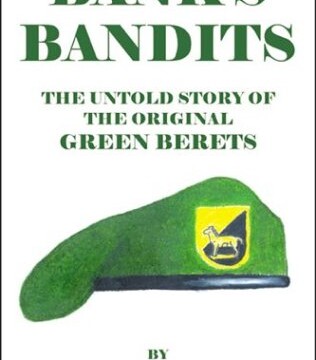
To say that Edward Fitzgerald is a retired lawyer who has written a memoir of his military experiences in the 1950’s may not make his book sound at first like the most exciting literary project of the year. Bank’s Bandits is, however, a highly readable work: a well-observed, literate, and often very funny account of...
Post
Custom and Ceremony
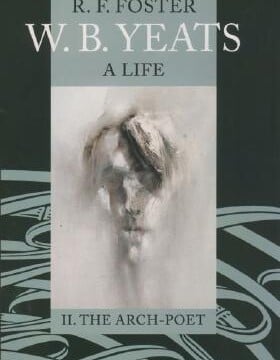
The first volume of R.F. Foster’s acclaimed biography of William Butler Yeats (The Apprentice Mage) appeared in 1997. Yeats’ son and daughter (now in their 70’s) chose him to be their father’s official biographer after their previous choice, F.S.L. Lyons, passed away, and Foster has been working on this project for the past 17 years. ...
Post
I Just Did Say That!
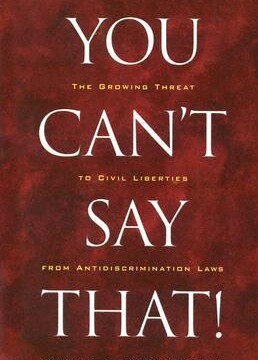
You Can’t Say That! The Growing Threat to Civil Liberties From Antidiscrimination Laws by David E. Bernstein Washington, D.C.: Cato Institute; 197 pp., $20.00 A Miller Brewing Company executive is fired for retelling a racy segment of a Seinfeld episode at the watercooler. An unwed teacher successfully sues the parochial school that fired her for becoming pregnant...
Post
The Unbearable Illegitimacy of American Law
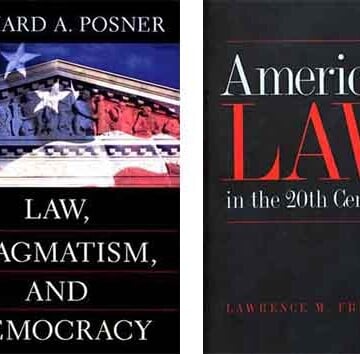
For some time now, American law and lawyers have had a legitimacy problem. Most Americans must wonder how it is that unelected federal judges have the power to declare that no state government can punish consensual homosexual relations, prohibit abortion, or permit prayer in the schools (to mention just a few of the striking things...
Post
Voyage to Albion
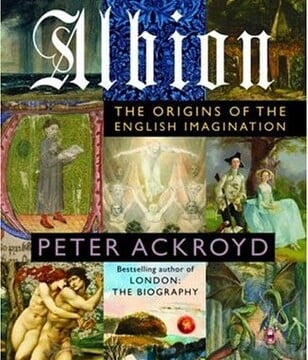
Englishness may be coming back into fashion. After the union of the English and Scottish crowns and the foundation of modern Britain in 1603, the idea of Englishness was increasingly submerged in, and confused with, the idea of Britishness. It now looks as if the English may be becoming self-conscious again. Three centuries of outward-looking...
Post
The Kindness of Strangers
“I have always depended on the kindness of strangers.” —Blanche DuBois, A Streetcar Named Desire Sometimes, enlightenment, like confusion, can come from an unexpected source. Take the comedian, George Carlin, for example. I think that his broadcasting of dirty words is a bit less than profound, as is his hostility toward most civilized conventions; some...
Post
The Impoverished Debate
Politics, said Henry Adams, “has always been the systematic organization of hatreds.” In recent months, best-seller lists have helped to prove Adams’ point, by featuring many vituperative political tracts from the left and right. The undisputed queen of the genre is Ann Coulter, whose overheated book Slander sold like hotcakes in 2002; lately, she has...
Post
The 11th Commandment
The Geography of Thought is an exercise in cultural polarization that makes two basic claims: There are profound cognitive differences between Westerners and Asians; and these differences have maintained themselves with striking continuity for thousands of years. Richard Nisbett, a social psychologist at the University of Michigan, locates the two utterly different modes of thought...
Post
A Week of Thursdays
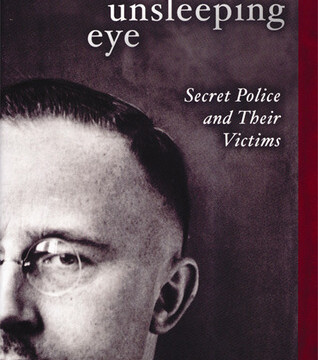
Robert Stove has written a readable and intelligent survey of secret policing, which he defines as “governments’ surveillance of their own subjects, as distinct from espionage.” Sensibly, he does not try to cover every known instance of this behavior but focuses on some celebrated instances, including the French police state of the 18th and 19th...
Post
A Fig From Smyrna
Jan Chryzostom Cardinal Korec, S.J., was an eyewitness to the 20th century’s most important event: the defeat of Marxism-Leninism in Eastern Europe by the Church established by Jesus Christ. At age 27, Korec was secretly consecra-ted as a bishop in Slovakia, a largely Catholic nation of five million. He led the underground Church after the...
Post
Mishmash
To judge from its title, we could reasonably expect this book to be about the growing gulf between women and men. Yet Andrew Hacker, a professor of political science at Queens College, spends much of the book reciting differences between the sexes that have always existed. With cumbersome detail (as if imparting new and fresh...
Post
Shine, Republic
“It is by building our own strength and character at home—not by crusading abroad—that we can contribute most to civilization throughout the world.” —Col. Charles Lindbergh The America First Committee of 1940-41 was the largest antiwar organization (800,000 members) in American history. Although it was founded by a group of Yale law students in the...
Post
Hayduke Lives!
It is difficult sometimes to remember the days before September 11, 2001, when George W. Bush was a decidedly ordinary President whose anemic victory the previous fall had required a month’s worth of recounts and court decisions to confirm. After the terrorist attacks, President Bush’s approval rating soared, and his administration sought and received vast...
Post
Dissensions by an Objective Reactionary
Andrei Navrozov’s newest book of reminiscences is intended to be the literary and photographic proof of his “internal exile.” By this term, he underscores his distance from the present age, in which philistine housewives have seized control of our social and political institutions and mass culture has become increasingly degraded. In this present time of...
Post
Objective, Burma!
The Burma campaign included some of the most charismatic and colorful soldiers of World War II: Vinegar Joe Stilwell and his X-Force, Claire Chennault and his Flying Tigers, Frank Merrill and his Marauders; the British commanders Harold Alexander, William Slim, Archibald Wavell, Claude Auchinleck, Orde Wingate and his Chindits, and Lord Louis Mountbatten, luxuriously ensconced...
Post
Letting the Catholic Out of the Baggins
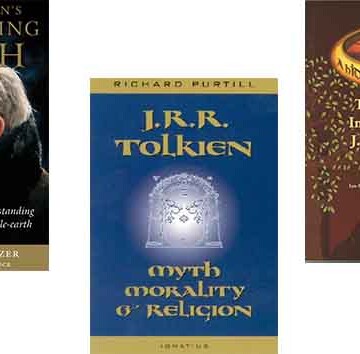
“Poetry requires not an examining but a believing frame of mind.” —T.B. Macaulay In the United Kingdom, back in 1997, Tolkien’s The Lord of the Rings was voted “the greatest book of the twentieth century” in several major polls, emerging as a runaway winner ahead of its nearest rival, Orwell’s 1984. Tolkien was also voted...