Writing in the mid-1980’s, Forrest McDonald observed that America’s founders would have recognized their handiwork as late as the early 1960’s, but not after. Despite technological changes, the Civil War, the Progressive Era, the New Deal, and two world wars, the governments most Americans dealt with were state and local. Except for the draft board...
Category: Reviews
The Joys of Winter
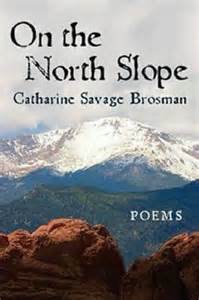
On the North Slope: Poems by Catharine Savage Brosman Macon, GA: Mercer University Press 129 pp., $17.00 The poems in this ninth full-length collection by Catharine Savage Brosman could have been composed only by a poet who has lived, studied, and written well through the spring, summer, and autumn and now on into the winter...
What Was Not Lost
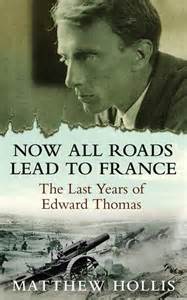
The name of this book’s subject doesn’t appear in the text proper until page 14, and then as that of an adult attending the opening in London’s Bloomsbury of the Poetry Bookshop on January 8, 1913. The celebratory crowd was salted with poets, beginning with the proprietor, Harold Monro, who intended to use the store...
Shadow of a Shade
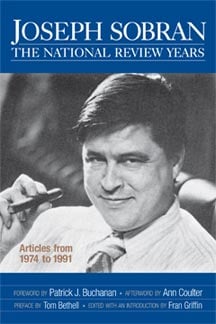
The cover of this book describes the late Joseph Sobran as “one of the greatest essayists of the twentieth century” and notes that he has often been compared with G.K. Chesterton and H.L. Mencken. As a lifelong admirer of Mencken and his work, I must say that I find the comparison an unfair one—unfair to...

Portrait of Lincoln, With Warts
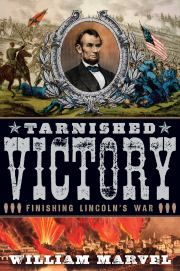
The publication of the last volume of William Marvel’s four-volume history of “Mr. Lincoln’s War” completes one of the more remarkable historical works of our time. Marvel is an “amateur,” nonacademic, historian. That is not a remarkable, but rather an old and honorable, thing. This is what is remarkable: I can think of no active...
Diplomacy Good and Bad
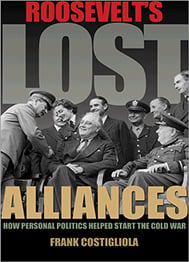
These two volumes shed considerable light on the fateful events of 1945-46, events determinative of much that followed in American foreign relations. The first argues that, had Franklin Roosevelt lived, even if for only another year, postwar history would have been altogether different. The second, by an experienced “realist” foreign-service officer, views the postwar developments...
Destroyers and Keepers
On becoming an historian long ago, I was most attracted to the period of American history from Jefferson to the great conflict of 1861-65. Were I a young historian today, rather than one well over the hill, I think I would take up instead the Progressive Era—historians’ convenient label for a period covering roughly the...
An Epic Bogosity
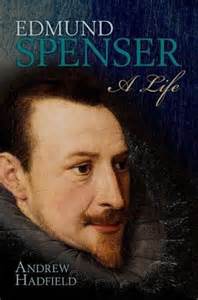
Edmund Spenser (1554-99) decided while still a student to make himself into the great English poet on the model of Vergil. So he began his publishing career with a set of 12 pastorals, and planned an enormous 24-book allegorical romance-epic, The Faerie Queene, to glorify Elizabeth I and her Britain as Vergil had glorified Rome...
A Giant Maligned
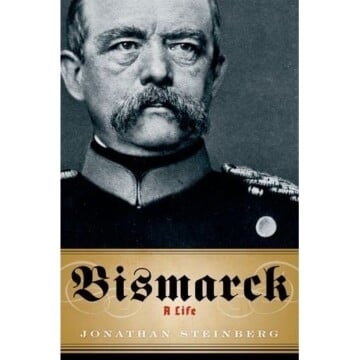
The “Great Men” of history were mostly mad or bad, and often both. To be driven by pride, vanity, and ruthless ambition is common and unremarkable. That drive is not sufficient to leave a lasting mark on the affairs of mankind, of course, but it is necessary. It is therefore redundant to dig diligently into...
How We Got Here
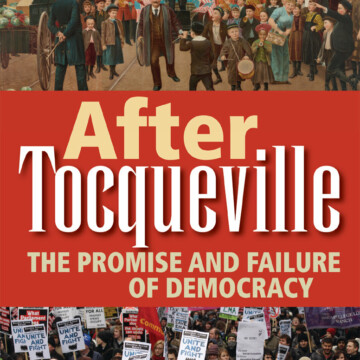
It’s very well indeed to find an author of Chilton Williamson, Jr.’s distinction and intelligence bidding us to a discussion of democracy. We need to have such a discussion. And if you really want to know why we need to have it, consider the tenor of national conversation during the presidential campaign. Take, for instance,...
The Magnetic Chain of Humanity
As Alan Wolfe noted in a broadside published in The New Republic in 2003, the study of American literature, especially in American Studies programs at our major universities, has, since the 1970’s, become little more than a vituperative exercise in anti-American polemics. Largely a confabulation of Latino, Native American, African-American, feminist, “queer,” and “whiteness” theorists...
A People’s Worst Enemy
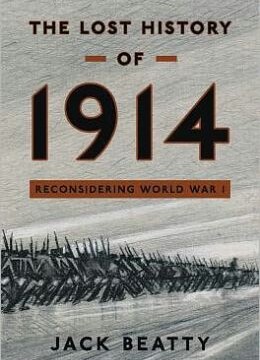
John Lukacs saw it as the great chasm dividing two centuries. George F. Kennan called it “the great seminal catastrophe of the twentieth century.” The adjective in the title of The Lost History of 1914 refers to the five ways in which the Great War might not have happened—five lost paths leading to peace. Though...
One City, Three Faiths
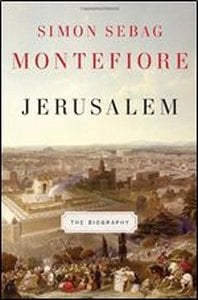
Simon Sebag Montefiore’s latest book is an ambitious yet incomplete survey of Jerusalem’s history. It begins with the Exodus from Egypt and concludes with the reunification of the Holy City under Israeli rule in 1967. Unlike the author’s magisterial biographies of Stalin, which demonstrated an excellent knowledge of the relevant material and brought to light...
A Republic Not Kept
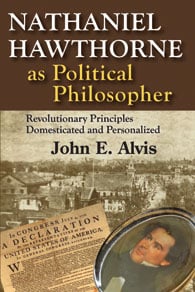
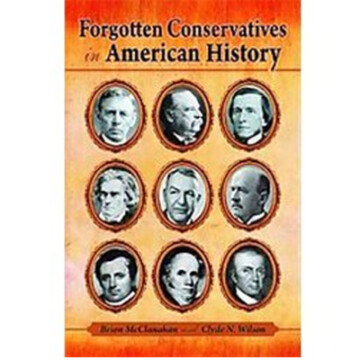
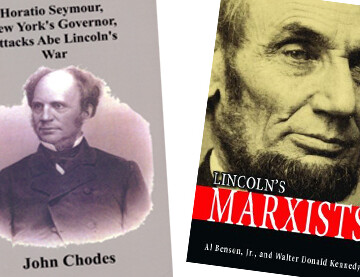
This book might have been called “Forgotten Figures in Real American History”—a social and intellectual reality, tradition, and political-economic program whose life ended, effectively, in 1861, though many dedicated public and literary men (including most of the contributors to this journal) have devoted—or rather sacrificed—themselves to resuscitating it, or at least to keeping its memory...
Maistre in the Dock
In September 2010, Émile Perreau-Saussine, age 37, was rushed to Addenbrooke’s Hospital in Cambridge, U.K., with chest pains. The junior physician on staff misdiagnosed his condition and thus failed to prevent his death hours later of a massive heart attack. This tragic incident is much more than a sad commentary on the quality of socialized healthcare...
An Unruly Character
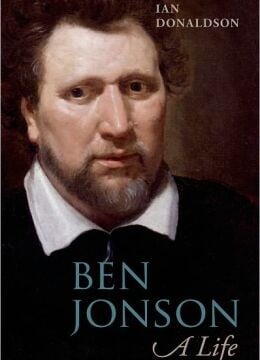
In his own time “Rare Ben Jonson”—sometime bricklayer, soldier, actor, dramatist, poet, critic, self-publicist, and personality—became a celebrity. When, at the age of 46, and weighing about 280 pounds, he set off to walk from London to Edinburgh, the houses of the wealthy and fashionable were opened to him, and—as this biography tells us—even ordinary...
By Merit Raised
“Satan exalted sat, by merit raised To that bad eminence; and, from despair Thus high uplifted beyond hope, aspires . . . insatiate to pursue Vain war with Heaven . . . ” —John Milton In his most recent book Charles Murray argues that over the course of more than five decades American society has...
A Study in Courage
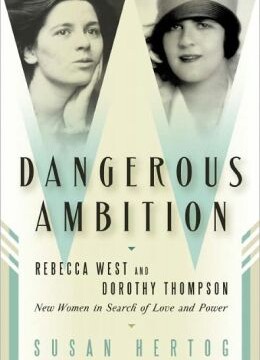
As one who dislikes “psycho-biography” as a genre, I was fully prepared to dislike this dual biography of Rebecca West and Dorothy Thompson. I was somewhat disarmed by the author’s Introduction, in which she attributes to West the observation that it was impossible for biographers to know anything beyond the bare facts about the details...
Caring About the Glock
To realize, even delusively, that knowing a little implies knowing a lot because the one is related to the other is to me a great comfort. If, for example, we know one subject well, an understanding of other parallel subjects is implied. Knowing the history of a city says much about the development and decay...
The Leopard at Large
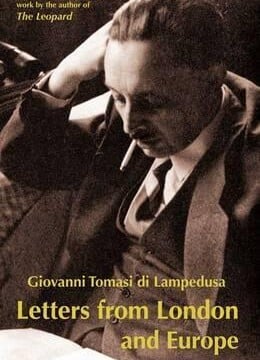
Giuseppe Tomasi di Lampedusa was the last prince of his long and languid line, but soon after his death he became one of the first names in 20th-century Italian letters. The Leopard, his 1958 novel about the last days of the Kingdom of the Two Sicilies and the first days of a (theoretically) united Kingdom...
The Life You Save Could Be Your Own
The thesis that modern ideologies are a secular replacement for transcendent religions is old hat even to the half-educated in Western society. (The phrase “immanentizing the eschaton” was coined by Eric Voegelin and popularized by William Buckley in the 60’s.) And so a cursory glance at James Schall’s book suggests that the author is simply...
Little Jimmy Rides Again
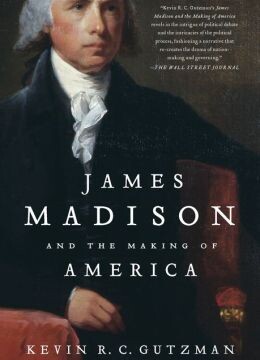
Books that refer in their titles to “the making of America” should generally be avoided. The phrase is meaningless, except in the realm of nationalistic mysticism. “America” was not made—she grew. She certainly was not “made” by James Madison, who only officiously tinkered with her surface. And which “America” is meant? There have existed a...
Beware of Mexicans Bearing Drugs
What is the Mexican drug war but a parable for our times? Here is the blighted and poisoned fruit of the very policies that our rulers promised us would bring growth and development, prosperity and peace, justice and the rule of law to the whole world. Those policies were free trade, unregulated capital and labor...
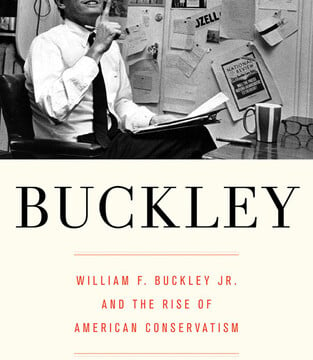
Buckley for the Masses
Overly committed as he was to supposedly universal political ideals and to the spread of American liberal democracy throughout the world, William F. Buckley, Jr., was not my kind of conservative. He could be tactless and cruel, as when he wrote in an obituary for Murray Rothbard that “Rothbard had defective judgment” and “couldn’t handle...
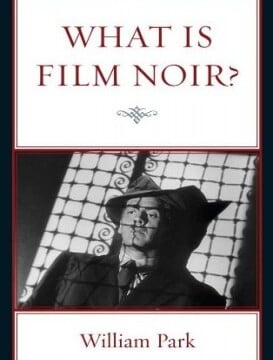
A Fedora World
If you are tired of being exposed to lousy movies full of sex, violence, ear-blasting noise, and floods of gratuitous special effects, 40-something actors who dress (and act) like teenagers, and predictable story lines, turn to William Park’s definitive book What Is Film Noir? for a reminder of what artful and truly adult entertainment films...
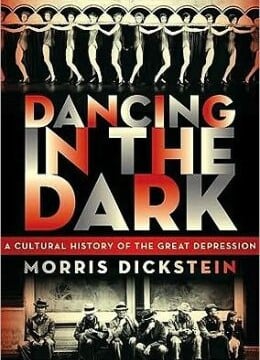
Chorus Lines
The catastrophic burst of the housing bubble in the fall of 2008 shook the foundations of the world economy and instilled a fear of a new depression. Morris Dickstein notes with irony that he completed his cultural history of the Great Depression just as the country was entering a steep recession with parallels to the...
Things Are Seldom What They Seem
The worldwide economic meltdown has upended many long-held beliefs about how economics and finance really work. Since 2008, a wide assortment of authors has started to question the standard explanations that the economics gurus have been offering us about globalization, free trade, and free markets. The growing controversy is hardly surprising. America’s recession and economic...
The Lady is Good
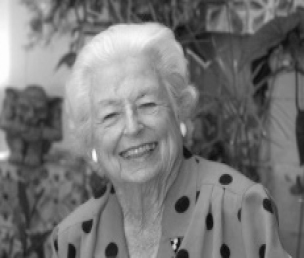
When I tell you that this little delight is a book of memoirs, I don’t want to be misunderstood. A sister of William F. Buckley, Jr., Miss Buckley, who was managing editor of National Review for 37 years (and who passed away recently at the age of 90), does not make “creative nonfiction” out of...
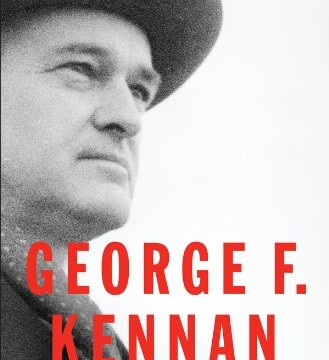
George F. Kennan: The Official Lie
This authorized biography of American statesman George Kennan has been 30 years in the writing, its publication being deferred until after Kennan’s death in 2004. The writer was the first to be given full access to Kennan’s voluminous unpublished diaries. Thus, the book devotes many pages to an exploration of Kennan’s inner life, at the...
Neither Devil nor Mystery
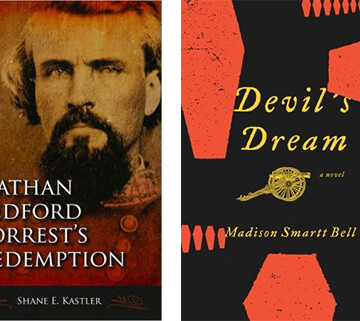
Gen. Nathan Bedford Forrest was no more a devil than you or I. He was an arresting character, a powerful leader of men, and one of those natural-born military geniuses who appear from time to time in history, which is not the same thing as a devil. The “devil” label was given to him by...
Science and Wisdom
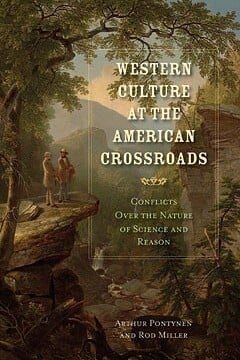
This is a remarkable book that will, however, be read by few. Its great fault is its defense of America, Christianity, and Western culture. The authors also make the egregious error of criticizing modern and postmodern thought, which they believe must be effectively combated if the Western world is to survive. In a vibrant culture,...
The Best Are Not the Brightest
Some years ago, in a discussion with the late Joe Sobran about the motivations of those managing our vastly overstretched empire, I pointed out that, for certain strata of the bureaucracy (the people who meet with E.U. officials in Brussels and attend cocktail parties in Georgetown, for example), as well as think-tank warriors theorizing about...
To the End of the World
Robert Hugh Benson (1871-1914) was the third son of Edward Benson, archbishop of Canterbury from 1883 to 1896, to become a successful author. Arthur Christopher Benson was a popular essayist and poet, whose best-known legacy is the text of the finale of Elgar’s Coronation Ode, “Land of Hope and Glory.” Edward Frederic Benson was a...
What Have They Wrought?
In spring 2005, President George W. Bush and Vice President Dick Cheney were beginning their second term in office. They were expending some “political capital,” as Bush put it, advancing their Social Security reform plan. Cheney came to the Orange County Register to meet with the editorial board, of which I was a member. For...
A Cardinal in Full
In his Testament politique, Armand-Jean du Plessis, Cardinal Duc de Richelieu, wrote, “A capable prince represents a great treasure in a state. A skillful counsel . . . is no less a treasure.” Surely Richelieu had himself in mind, as well as his sovereign, Louis XIII (1601-43). He added, “But the acting of both in...
The Fellowship of Joking
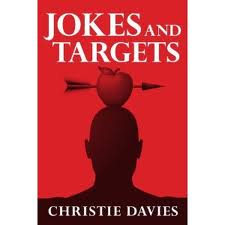
Besides regaling Chronicles readers with dismaying reports on “the strange death of moral Britain” (the title of the immediate predecessor to the present book), Christie Davies continues his professional pursuits, chief among which is the study of humor. Jokes and Targets is his fifth book concerned with the subject. It focuses on six joke cycles,...
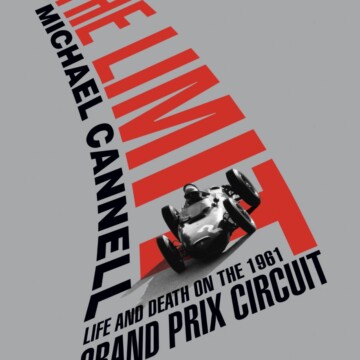
Against His Own Nature
Formula 1 and sports car racing back in the 50’s and early 60’s, when drivers wore polo shirts and flimsy helmets, and before seat belts and other safety-related developments, is for a host of reasons a most appealing topic, but the more you think of it, the less satisfactory is the present result: this book. ...
Sesquicentennial Sidelights
Despite all that has passed since, the war of 1861-65 arguably remains the central event of American history. In proportion to population no other event equals it in mobilization, death, destruction, and revolutionary change. We are into the Sesquicentennial, and one would like to think that Americans will take the opportunity to contemplate where we...
Big Surprise
“When we gained power, the country was at the edge of the abyss; since, we have taken a great step forward.” —unnamed African government minister Tocqueville in the 19th century, and Solzhenitsyn in the 20th, noted that conformity of thought is powerfully prevalent among Americans. I have always thought that a strong justification for freedom...
A Warring Visionary
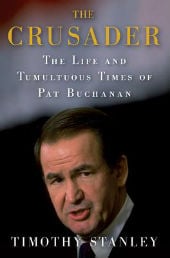
British scholar Timothy Stanley has produced the first significant biography of Patrick J. Buchanan, describing his life from his boyhood in Washington, D.C., up to the present. Stanley’s book is written in a breezy, informal manner—Buchanan is referred to as “Pat” throughout—and it makes for quick and generally enjoyable reading. Stanley gets much right in...
History Today
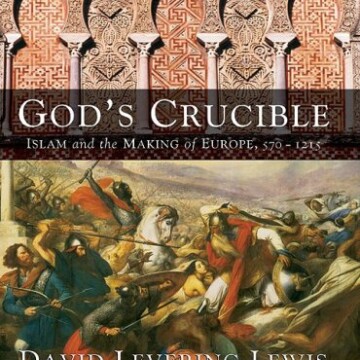
God’s Crucible is a fluid 473-page panegyric of Islam and a visceral diatribe against the Christian West. Significantly, in the Index, one finds under al-Andalus the inevitable entry on “Christian fanaticism” but searches in vain for a reference to “Islamic fanaticism” or anything remotely analogous to it. Levering Lewis’s thesis is not new, having often...
A Warring Visionary
The Crusader: The Life and Tumultuous Times of Pat Buchanan by Timothy Stanley New York: Thomas Dunne Books 464 pp., $27.99 British scholar Timothy Stanley has produced the first significant biography of Patrick J. Buchanan, describing his life from his boyhood in Washington, D.C., up ...
Fall of a Titan
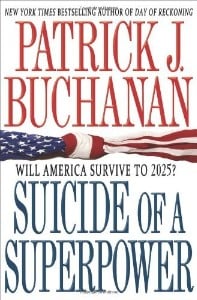
Pat Buchanan’s new book is another tour de force. Suicide of a Superpower builds on the prophetic warnings first articulated in such earlier books as The Great Betrayal; A Republic, Not an Empire; and, most importantly, Death of the West. The current work exhibits the most famous paleoconservative’s trademark word-crafting verve, encyclopedic knowledge of history...
Insight and Exaltation
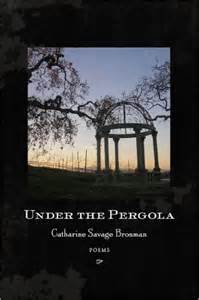
Readers who know the exceptional poetry of Catharine Savage Brosman will recognize familiar landscapes and motifs in her latest book, Under the Pergola. The collection is divided into two sections. The first, On Bayou Bonfouca, comprises poems that reflect the people, topography, flora, and fauna of south Louisiana from greater New Orleans to the Texas...
The End of Education
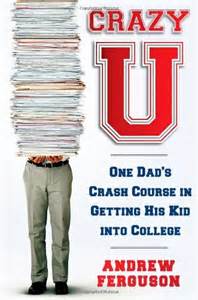
“Crazy U?” Or “Crazy Me?” A self-deprecating Andrew Ferguson must at least have been tempted by such a title. His self-absorbed son (and what 17-year-old isn’t?) would surely have agreed, had he been remotely aware of the grief that the whole insane matriculation process was causing his father. Certainly, the elder Ferguson did have his...
Homing in on England
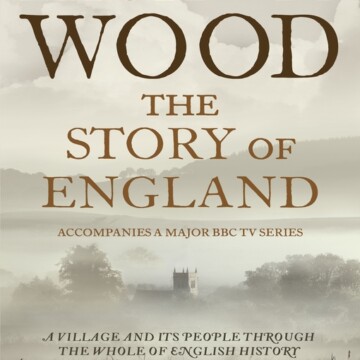
Michael Wood begins with a quotation from Blake: “To Particularize is the Alone Distinction of Merit.” This line betokens his aim, which is to zero in on one small English place and use its specific saga to tell the wider tale of all England from prehistory to present. The place is Kibworth, an outwardly unremarkable...
Origins of the Balkan Wars
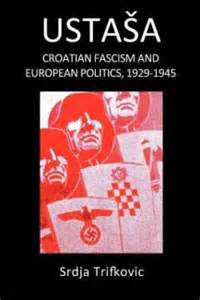
The long-awaited new edition of Srdja Trifkovic’s work on the genocidal Ustaša—Croatian Revolutionary Movement is a pivotal contribution to modern Balkan studies, an area regrettably mired in deception, half-truths, and outright lies served up with a noxious dosage of outright Serbophobia. This work is a painstakingly detailed study of the bloodthirsty Croatian Nazis and their...
Gabriel’s Horn
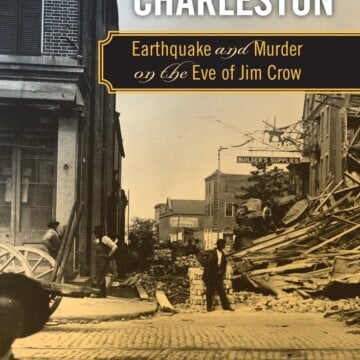
Surely, no American city has endured such a history of disaster as Charleston, set beguilingly beside the Atlantic upon her fragile spit of earth between the Ashley and Cooper rivers. Fires, floods, epidemics, blockades, sieges, bombardments, hurricanes, and earthquakes have repeatedly scarred her, but arguably the great Charleston earthquake of 1886 was the most destructive...
Myth and Phobia
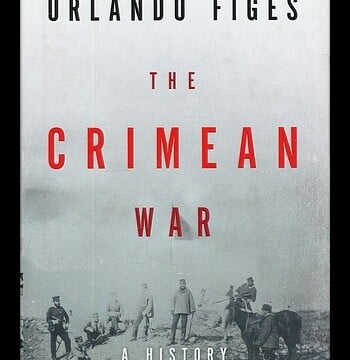
Orlando Figes’ new book does much to shed light on a conflict long neglected by contemporary historians and is likely to become the preeminent work on the Crimean War. However, the book suffers from serious shortcomings that prevent it from becoming a military history of such caliber as Antony Beevor’s and Max Hastings’ works. Figes...
Just Say No to the Kool-Aid
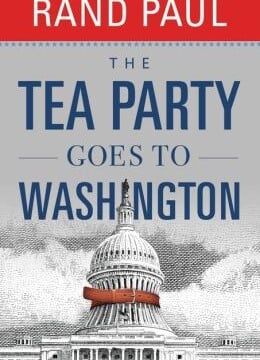
With the able assistance of Jack Hunter, Sen. Rand Paul has written a must-read book for conservatives wondering why we continue to send Republicans to Washington, D.C., who say all of the right things when running for office and then quickly fall in line with the “inside the Beltway” political elites who have controlled the...