Category: Reviews

Home Reviews
Proper Books
Post

Proper Books

Way back in prehistory—1991, or thereabouts—a promising Alabaman author started to register on readers’ radars, thanks to lambent reviews from Northern litterateurs surprised to discover that there was at least one Southron who could not only write, but write as though an amphetamined-up James Joyce was simultaneously charioteering Jonathan Swift, Flannery O’Connor, and John Kennedy...
Out and About
Post

Out and About

The American Empire has been on the minds of at least some conservatives for about two decades, ever since the sudden collapse of the Soviet Empire caught us all by surprise.  It isn’t that Americans haven’t argued about empire before: From the 1890’s until December 7, 1941, there was an on-again, off-again but very lively...

Take a Hand
Post

Take a Hand

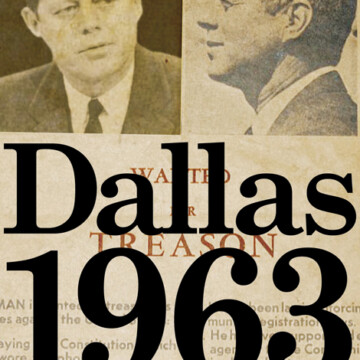
There’s no analysis to speak of in Bill Minutaglio’s and Steven L. Davis’s account of life and events in the city—Dallas—that much of the world came to hate after the Kennedy assassination.  There is instead chronological recitation: this person, that person; words, deeds, threats, accusations, pleas, apologies, gestures; an amassing and piling up of facts,...

A Certain Knack
Post

A Certain Knack

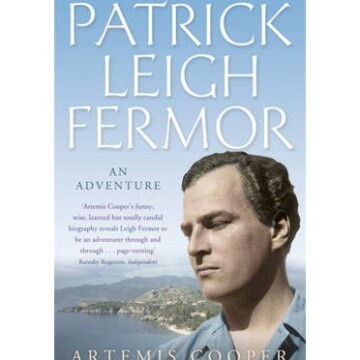
Even at first dip, this book gives the impression of being unreadable to any but the tweediest Anglophile.  There are still such people in the world, you know, and some of them have even been born in Britain.  For them, hearing the names “Lady Diana Cooper” or “St. Pancras” is like a drop of lime...
France in Asia, and at Home
Post

France in Asia, and at Home

These books on postwar French history are meritorious and complementary.  Professor Logevall’s effort is a careful military and political history of the French Indo-Chinese war, including three chapters on its aftermath.  Mr. Fenby’s readable biography discusses the major events in De Gaulle’s life and supplies a good introduction to it for the uninitiated. Both books...
The Con Man
Post

The Con Man

“The more identities a man has, the more they express the person they conceal.” —John le Carré, Tinker, Tailor, Soldier, Spy   Fifty years ago, The Spy Who Came in From the Cold completed the most successful transformation of David Cornwell’s shape-shifting life.  The son of a war profiteer and con man became John le...

The End of (a) History
Post

The End of (a) History

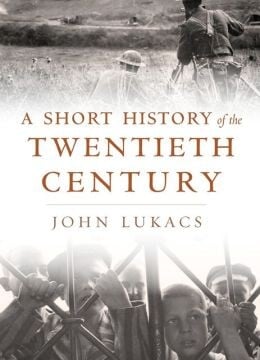
“There is significance in the end of things,” a young man, hinting at a wisdom beyond his years, once told me.  For that reason alone, A Short History of the Twentieth Century, the latest book by John Lukacs, would be significant.  For this is not just his most recent book but, as he announced in...

Updike’s Grandfather
Post

Updike’s Grandfather

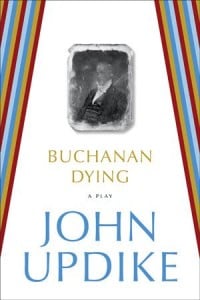
“Our Union rests upon public opinion, and can never be cemented by the blood of its citizens shed in civil war.  If it cannot live in the affections of the people, it must one day perish.” —President James Buchanan, 1860   A poll of American historians, not long ago, chose James Buchanan as “the worst”...

The God With Feet of Clay
Post

The God With Feet of Clay

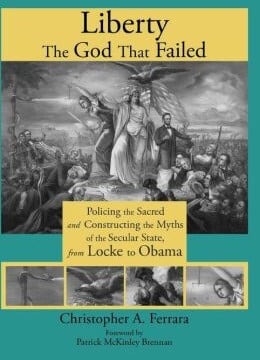
Liberty: The God That Failed is Christopher Ferrara’s second 90-caliber salvo against liberalism, left and right.  His first, The Church and the Libertarian: A Defense of the Catholic Church’s Teaching on Man, Economy, and State, smashed the anti-Christian dogma of Austrian economics.  This 699-page tome goes further.  It will send the neocons into the corner...

The Past Is Always Prologue
Post

The Past Is Always Prologue

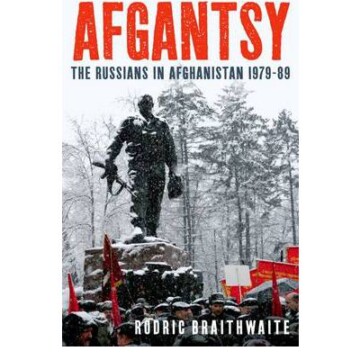
Rodric Braithwaite is a former British ambassador to the Soviet Union and Yeltsin’s Russia and a specialist in Russian history.  Utilizing his extensive personal contacts with Afghan War veterans (known as afgantsy in Russian) and his fluency in the Russian language, Braithwaite has written an account of the Soviets’ involvement in Afghanistan that is detailed,...

Tyranny in Our Time
Post

Tyranny in Our Time

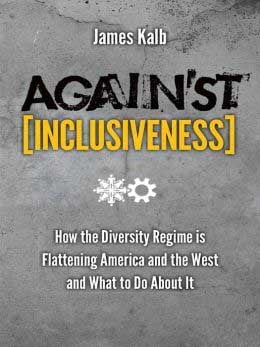
There is a saying among jurists that hard cases make bad law.  Similarly, every book critic knows that the best books make for hard reviewing.  Faced with a truly fine work, the reviewer is tempted simply to reproduce the author’s thesis in abbreviation, while scattering as many of the most quotable sentences as space allows. ...

The Case Against Political Consensus
Post

The Case Against Political Consensus

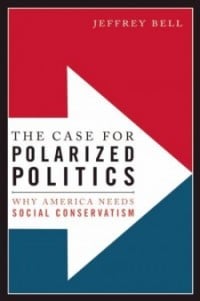
Jeffrey Bell is perhaps the most experienced conservative political advisor in Washington, D.C.  Once a key Reagan campaign advisor, Bell later became a political candidate himself, scoring a stunning primary upset against a seated Republican senator in New Jersey only to lose in the general election to Democrat Bill Bradley.  Bell, a graduate of Columbia...

An Observer of Men
Post

An Observer of Men

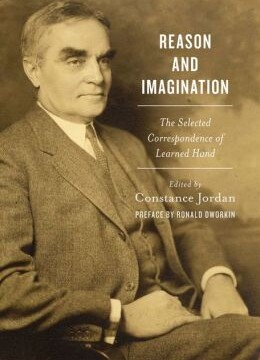
This selection from around 65,000 pieces of correspondence, edited by Learned Hand’s granddaughter, a professor emerita of English at the Claremont Graduate School, could not have been better done.  Both Hand’s letters and the letters of his correspondents are included; some of the most notable exchanges are with Bernard Berenson, Philip Littell, Walter Lippmann, and...

A Highly Acceptable Man
Post

A Highly Acceptable Man

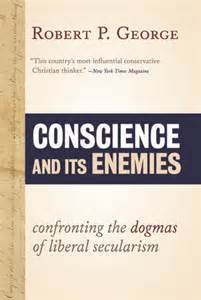
Conscience and its Enemies is a collection of Robert George’s recent writings for a general audience.  In addition to the title topic, it includes chapters on the defense of natural marriage, the protection of life from conception to natural death, the nature of moral reasoning, and the need for limited government.  Overall, the pieces in...

A Silver Pen in His Mouth
Post

A Silver Pen in His Mouth

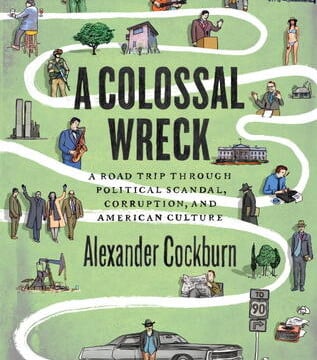
“When I began work on this biography, I intended it to be a very favourable portrait,” began a book on Graham Greene, published amid great controversy some 20 years ago.  Alexander Cockburn quotes this phrase to expose Michael Shelden’s duplicity, suggesting it had all along been Shelden’s intention to do a hatchet job on Greene,...

One Big Thing
Post

One Big Thing

This book’s heart is in the right place, but its head needs, as they say, to wrap itself around that heart.  Devouring Freedom is substantially a useful history of the spending wars between America’s two main political parties since 1932, culminating in the years since 2009 when Barack Obama became president of the United States. ...

The End of the Trail
Post

The End of the Trail

“What am I doing here?”  That was not the question that Paul Theroux expected to be asking himself not long after he returned to his beloved Africa and exclaimed that he was “happy again.”  His last African journey, chronicled in Dark Star Safari (2003), was south by land from Cairo to Cape Town.  This time,...

Blowing Bubbles
Post

Blowing Bubbles

Between 2000 and 2005 I found myself spending an increasing amount of time scratching my head.  I had been researching and investing in financial-services stocks since 1992, but what I saw during that five-year span confounded me.  Banks offered “ninja” mortgages—no income, no job, no assets—to any borrower brazen enough to walk into a branch...

Light of Being
Post

Light of Being

Lest readers misunderstand, it must be said at the outset that these poems, selected from Psaumes de tous mes temps (1974), by Patrice de La Tour du Pin (1911-75), are not translations, even rough ones, from the Psalms of the Bible.  The poet did serve as a translator for the Catholic Church when use of...

The Agrarian Burden
Post

The Agrarian Burden

Recently, the Intercollegiate Studies Institute hosted a panel discussion on the “great books of conservatism,” among which was Richard Weaver’s 1948 work Ideas Have Consequences.  The title, as one panelist noted, has become something of a catchphrase on the right, even as the memory of Weaver and his own influences, the Southern Agrarians, fades into...

A Difficult Decade
Post

A Difficult Decade

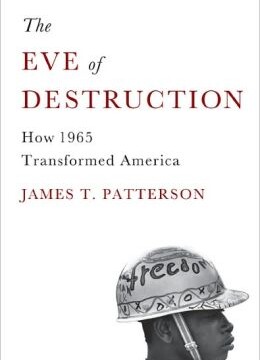
James Patterson’s controlling idea is that the 60’s became the 60’s in 1965, and that this represented an “Eve of Destruction.”  One struggles for about 300 pages trying to find out . . . destruction of what? The title comes from a long-forgotten song by a long-forgotten singer, Barry McGuire.  “Eve of Destruction” did get...

The Pike
Post

The Pike

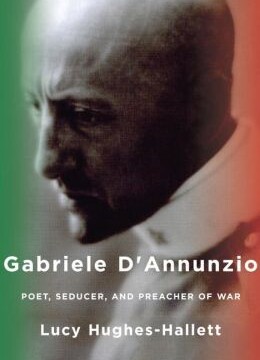
The French wordsmith Romain Rolland, himself no slouch at being derivative as a thinker, likened his Italian contemporary Gabriele d’Annunzio to a pike, the freshwater predator famous for lying still and snapping at whatever comes.  What stood for prey in this simile were the ideas of d’Annunzio’s immediate literary predecessors or near coevals, which made...

Persecutions to Come
Post

Persecutions to Come

“The only true spirit of tolerance consists in our conscientious toleration of each other’s intolerance.” —S.T. Coleridge Consider the unfortunate case of Prof. Thomas Klocek, whose story is one of many examples of intolerance recounted in D.A. Carson’s most recent book.  Klocek engaged in a brief debate with a group of Palestinian student activists at...

Horses and Carriages
Post

Horses and Carriages

I don’t know whether I buy completely into Mary Eberstadt’s arresting title.  How does anybody “lose” God the Father Almighty, Maker of Heaven and Earth (as the Nicene Creed impressively denominates Him)?  He just kind of went south?  Let that go.  We get the general, and indisputable, idea, which is that relationships between God and...

Joking Through the Apocalypse
Post

Joking Through the Apocalypse

Mark Steyn is the only neoconservative who can still make you laugh.  David Brooks could, when he and I worked at the Washington Times in the mid-1980’s; he was great with the jokes in person and in writing.  But after Brooks was hired at the New York Times in 2003, he took on the High...

The Country Against the Empire
Post

The Country Against the Empire

A prophet and a polemicist, David Gelernter displays anything but a light touch in this attack on “imperial academia” and what it has wrought.  Like most prophets, Gelernter the polemicist hopes to be proved wrong.  Perhaps, with our culture dismantled and the “Obama­crats” in charge, the contest is over—game, set, and match.  Tennis was once...

Faith in the Dock
Post

Faith in the Dock

What was once known as the West—Western Europe and North America—has largely abandoned its Christian roots and fallen into apostasy.  In fact, it has succumbed to neopaganism—a practical atheism that, similar to 18th-century Deism, relegates God (if He exists) to a peripheral role in one’s life.  People in increasing numbers do not believe it is...

Post

Living the Good Life

Many generations ago, when our country was very new in the political sense but very old still in respect of its general culture, many educated men and women kept what were in those days called commonplace books, mainly a compendium of quotations gleaned from their quotidian reading.  The practice lapsed a century and a half...

Cigarette Holders, Nicotine Gum
Post

Cigarette Holders, Nicotine Gum

Is President Obama a “change agent” on the level of Franklin D. Roosevelt, with a New New Deal comparable to FDR’s New Deal? Michael Grunwald’s book details the enactment and operation of Obama’s almost $800 billion stimulus bill, officially called the American Recovery and Reinvestment Act of 2009.  Though he covers only the first months...

The Post-Suburban Jesus
Post

The Post-Suburban Jesus

By a generous estimate, evangelical Christians are as much as one third of the U.S. population.  In fact, they are the only Christian demographic that has shown exuberant growth in recent decades—a period during which church attendance overall has been steadily eroding.  A significant part of this growth has taken place in the nondenominational or...

Targets Are Where You Find ‘Em!
Post

Targets Are Where You Find ‘Em!

To put this volume in perspective, we have to know that the cartoonist was a young amateur who actually considered making a career of the art, but was then drawn to another mode of expression—one which transcended, perhaps, her cartoons, but also sublated them.  They were always a part of her imagination; the habit of...

Why Garry Wills?
Post

Why Garry Wills?

Garry Wills identifies himself as a Christian.  He says he accepts the creeds, along with prayer, divine providence, the Gospels, the Eucharist, and the Mystical Body of Christ as the body of all believers.  He thinks it a bad thing that “article by article, parts of the Creed are fading from some churches.”  He also...

Mal de Mer
Post

Mal de Mer

This novel inevitably invites comparison with Jean Raspail’s The Camp of the Saints (1973), published in France, as the English equivalent of Raspail’s famous book.  The comparison is apt, so far as subject and politics go.  But that, really, is the end of it.  The Camp of the Saints describes the invasion of southern France...

The Mind of the South
Post

The Mind of the South

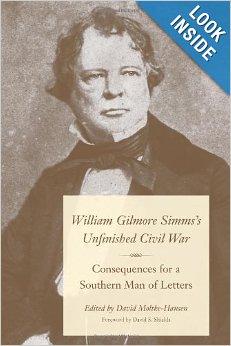
That a tale should live, While temples perish!  That a poet’s song Should keep its echoes fresh for all the hills That could not keep their cities! . . . So wrote William Gilmore Simms in his poem “The Lions of Mycenae” (1870).  He was alluding to Aeschylus, Horace, and Homer, but was no doubt...

Late Autumn Light
Post

Late Autumn Light

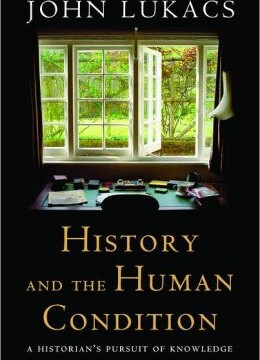
I own almost every book written by John Lukacs—close to 40 now—and several in multiple editions, but never before have I spent so much time contemplating the cover of one of these volumes.  It’s not simply that the jacket, designed by Sam Torode, is attractive, a model of simplicity and elegance: It seems significant.  A...

Anarch’s Journey
Post

Anarch’s Journey

Ernst Jünger was 20th-century Germany’s most prolific writer.  Throughout his long life—he lived to age 102—he chronicled the upheavals of that most violent century.  Despite his talent and output, Jünger remains virtually unknown in America.  One reason is language; the other, politics.  Jünger was an unrepentant man of the right.  Yet no less of a...

Where Color Led
Post

Where Color Led

Yale University Press promises that Witness to History “will fascinate anyone interested in the great political figures of world history during the twentieth century.”  On this book’s back cover, Alistair Horne hails John Wheeler-Bennett as “a gifted historian . . . one of the outstanding, though unsung, certainly unrepeatable Britons of his age.” It is...

A Sticker in Kentucky
Post

A Sticker in Kentucky

Called by its sponsor, the National Endowment for the Humanities, “the highest honor the federal government bestows for distinguished intellectual and public achievement in the humanities,” the annual Jefferson Lecture has been delivered by such a variety of historians, scholars, novelists, and poets as to frustrate all efforts to descry a party line among them,...

Blood Will Tell
Post

Blood Will Tell

In Tom Wolfe’s America the Northern WASP elite is shallow and cowardly, the most sacrosanct minority groups seethe with ingratitude toward the majority and snarl at one another, culture is dominated by the conspicuous vulgarity of new and ill-gotten wealth, and manners and morals are in a catastrophic nosedive in which the relation of man...

A Yanqui Doodle Dandy
Post

A Yanqui Doodle Dandy

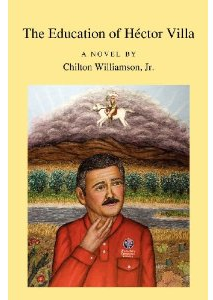
Henry Adams published his eponymous autobiography in the early years of the last century.  Now, just about a hundred years after The Education of Henry Adams, we have The Education of Héctor Villa.  America is center stage in both, but they are two very different Americas.  The one Adams portrayed was on the rise and...

Maya at Half-Past Midnight
Post

Maya at Half-Past Midnight

Zero Dark Thirty Produced by Columbia and Annapurna Pictures Directed by Kathryn Bigelow Screenplay Mark Boal Distributed by Columbia and Sony Pictures   Those who read this column may recall how impressed I was by The Hurt Locker five years ago.  As directed by Kathryn Bigelow and written by Mark Boal, it still is the...

Sex Matters
Post

Sex Matters

Rarely have I read in so few pages a book as thought-provoking and compelling as J. Budziszewski’s On the Meaning of Sex.  Budziszewski, a Yale Ph.D. and professor of government and philosophy at the University of Texas, has grappled for years with the sad effects of our era’s shallow understanding of sex on the lives...

Giving Up, Giving In
Post

Giving Up, Giving In

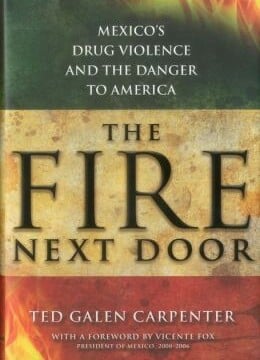
“But what if Juárez is not a failure?  What if it is closer to the future that beckons all of us from our safe streets and Internet cocoons?” —Charles Bowden, Murder City On September 30, 2010, David Hartley and his wife, Tiffany, were jet-skiing on Falcon Lake along the Texas-Mexico border when a speedboat approached...

America the Redeemer
Post

America the Redeemer

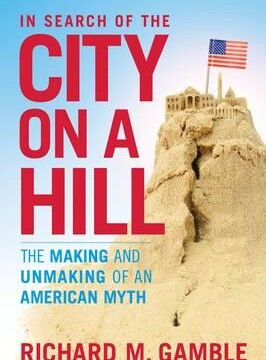
Jesus’ words to his followers about the city on a hill, coming between references to salt without savor and the futility of hiding a light under a bushel, are admonitory, not congratulatory.  Those upon whom the light has been bestowed are not to regard themselves as elevated, nor are they instructed to build a city. ...

In God We Fail
Post

In God We Fail

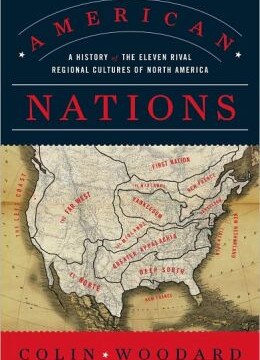
The recent flood of secession petitions in the wake of the re-election of President Barack Obama has raised secession to something more than the curiosity or esoteric joke that it has been heretofore.  In the 1990’s an occasional newspaper article appeared about the League of the South or the Vermont independence movement, treating them as...

That Hideous Absolutism
Post

That Hideous Absolutism

To the modern mind, religion and magic are related.  Both are based on superstition, and both have been proved false by science.  C.S. Lewis thought otherwise: Magic is more closely related to science.  Both function as alternatives to religion, both lack skepticism, and, most importantly, both desire to control the world.  Science, not religion, is...

Home Truths on Ecology
Post

Home Truths on Ecology

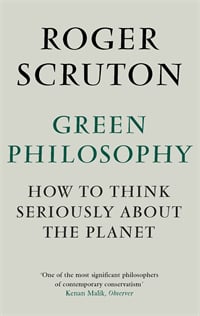
The relationship between Greens and Conservatives in England is notoriously fractious.  Many conservatives see Greens as sub-Marxist semibeatniks, and many Greens see conservatives as military-industrial Morlocks.  Yet etymology alone suggests that conservatism and conservationism should shade into each other, just as blue blends into green and back again in the color spectrum.  And even if...

Post

Mr. Eliot’s Double Life

These two massive volumes—the first published originally in 1988, the second now joining it with much fanfare—chronicle the period during which T.S. Eliot developed from the scion of a prosperous Midwestern family to the poet of The Waste Land and “Prufrock,” but also to a banker and one-man editorial staff of a fledgling new journal...

Institutionalizing Compassion
Post

Institutionalizing Compassion

Writing in the mid-1980’s, Forrest McDonald observed that America’s founders would have recognized their handiwork as late as the early 1960’s, but not after.  Despite technological changes, the Civil War, the Progressive Era, the New Deal, and two world wars, the governments most Americans dealt with were state and local.  Except for the draft board...

The Sickness Unto Death
Post

The Sickness Unto Death

George Santayana’s dictum—“Those who forget the past . . . ”—has long since become one of those clichés beloved of high-school history teachers, who never tire of repeating it to their indifferent charges.  But Santayana would surely have agreed that forgetting is sometimes necessary.  To dwell obsessively on the past, as any spurned lover knows,...