One of the few parts of the U.S. Constitution that is still followed by the government concerns the granting of copyrights and patents. Article I, Section 8, reads, “Congress shall have the power . . . To promote the progress of science and useful arts, by securing for limited times to authors and inventors the...
Category: Reviews
The Last Fall of France
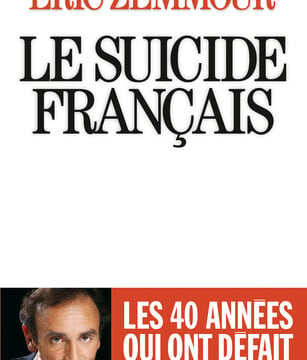
No one excels at polemics as the French do, save for the English at certain periods of their history (the 17th and 18th centuries, for example), and Le suicide français is a masterly specimen of the genre by Éric Zemmour, the author of many books of fiction and nonfiction and a columnist for Le Figaro. ...
Biting the Bullet
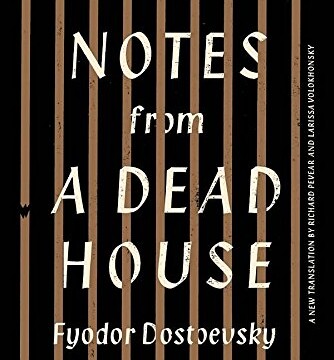
The flyleaf of this book sports a quote (“One finally gets the musical whole of Dostoevsky’s original”) from an enthusiastic notice in the New York Times Book Review of a new translation of The Brothers Karamazov, which the Pevear-Volokh onsky tandem unleashed upon the English-speaking world a quarter of a century ago. As the author...
Mismatch
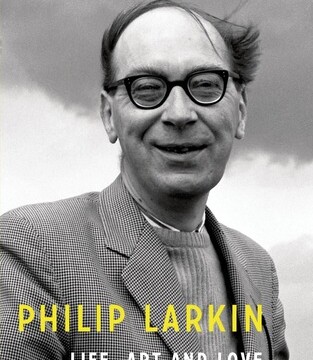
Philip Larkin, the poet-librarian of Hull University, died December 2, 1985, over 29 years ago. In the years since Andrew Motion published the first biography (1993), and Anthony Thwaite published both the first complete edition of the poems (1989) and the first collection of letters (1992), a small industry has grown up devoted to the...
Annus Horribilis
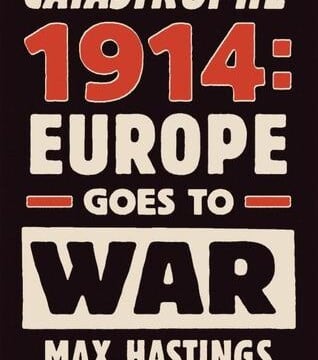
The centennial of that enormous calamity later known as World War I saw the release of about a dozen books on the subject. Catastrophe 1914, by Sir Max Hastings, one of the foremost British military historians writing today, is an exhaustive, one-volume history of that annus horribilis and the events leading up to the fatal...
Good Grief
Poetry has to me never been what I have so often heard called a problem, and that was so for the simplest of reasons: It was never presented to me as a problem until I was advanced in school, after which it was reformulated as a target of incomprehending odium by students whose insensibility had...
Defining Work
This collection harkens back to a bygone era when the essay was a common medium of the literary artist. As one can pick up a volume of essays by G.K. Chesterton or Hilaire Belloc nearly a century after their first publication and still be enthralled and enchanted by their freshness and continuing relevance, the same...
The Way of All Flesh
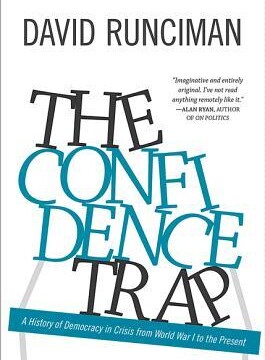
The Confidence Trap is a book that, in spite of its many penetrating insights, peripheral as well as central to its thesis, on further examination is less striking and original than it promised to be. Runciman begins with an introductory chapter about Alexis de Tocqueville’s early contribution to understanding how democratic nations cope with crises...
Everyman’s Poet
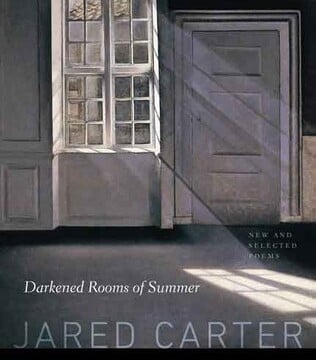
Jared Carter, who has retired from a career in publishing, is a Midwestern poet of stature. He won the Walt Whitman Award of the Academy of American Poets and the Poets’ Prize; he has had a Guggenheim fellowship and two fellowships from the National Endowment for the Arts. He is profiled in the Dictionary of...
Idealists Without Illusions
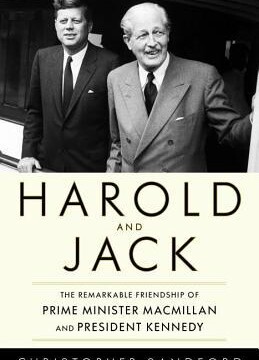
Like all relationships, the special transatlantic one is in a state of constant flux—warmer or cooler at different times, enhanced by empathy, marred by misunderstandings, riven by reality—but always affected by the personal qualities of the incumbents of 1600 Pennsylvania Avenue and 10 Downing Street. For a short but eventful span between January 1961 and...
A Book That Needs to Be Read
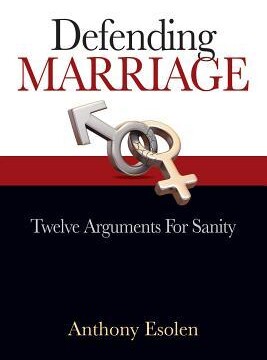
There are many reasons why one might conclude that the United States is in a spiral of self-destruction and is in fact no longer a Christian country. One of the most obvious—apart from 40-plus years of legalized abortion—is the current effort to redefine marriage to include homosexual couples. But this is just the latest in...
Adrift in Eminent Domain
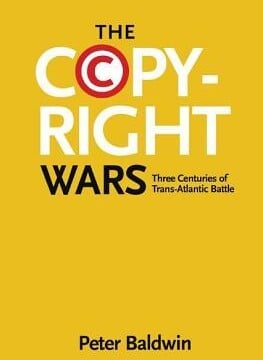
I begin with a flourish of disclosure, which gives me great pleasure as a gesture of wistful recollection. Professor Baldwin was my roommate at university, occupying the bunk above mine. The wall space over that prisonlike fixture of canvas ticking and rude ironmongery was decorated with an enormous portrait of Karl Marx that would not...
The Practice of Politics
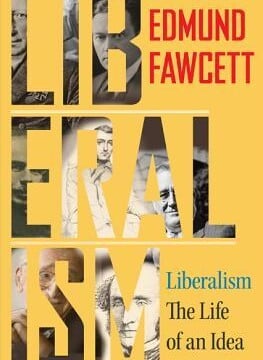
This is a history of liberalism as it appears to an intelligent, well-informed, and thoroughly convinced English liberal who worked for many years as an editor and correspondent for The Economist. It is useful as a sympathetic exploration of the stages through which the political outlook that rules us today has advanced. The book is...
4.0 and You’re Out!
When I was a junior at the Trinity School in New York, Mr. Clarence Bruner-Smith, head of the Upper School, assured me that I had an excellent chance of being accepted at Yale if I accepted the editorship of the school literary magazine. I thought that a ridiculous reason to be accepted anywhere, and that...
Waitin’ for The Robert E. Lee
The life of Lee having been “done,” redone, and perhaps even undone by revisionist treatment, the present weighty phenomenon requires some contextual examination. We might first and simply ask the question, What is the purpose of this book? I mean to say that the revisionist treatment of the so-called Civil War has been gathering force...
The Revolution That Isn’t
The Second Machine Age: Work, Progress, and Prosperity in a Time of Brilliant Technologies by Erik Brynjolfsson and Andrew McAfee New York: W.W. Norton & Company, Inc. 306 pp., $26.95 Conservatives have a love-hate relationship with technology. Although we often decry the effects of the usage of new technologies on societal traditions, it is conservative...
A Question of Fairness
It all comes down to questions of fairness. On January 27, 2007, a journalist by the name of Peter Finn published in the Washington Post an interview with Ivan Tolstoy, a literary scholar distantly related to the famous writer. The subject of the interview was Tolstoy’s The Laundered Novel, a product of his ten-year investigation...
Underground Man
Was it fair of Solzhenitsyn to call Peter the Great “a mediocre man, if not a barbarian”? I honestly don’t know. What I do know is that history didn’t begin with the Cold War, and that long before Solzhenitsyn, renowned novelist Fyodor Dostoyevsky expressed reservations of his own about the historical impact of Russia’s most...
The Ability to See
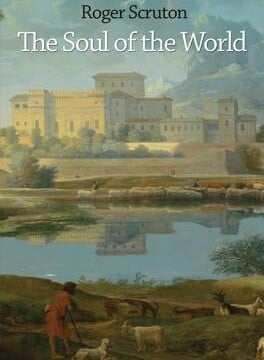
Through books on subjects ranging from wine to hunting, music to environmentalism, British philosopher Roger Scruton has constructed a multifaceted attack on liberalism. In his latest book, Scruton addresses the contention that religion is a byproduct of our culture or our genes, and therefore ultimately some kind of a fantasy projection. Liberals have convinced themselves...
Battle of the Journeymen
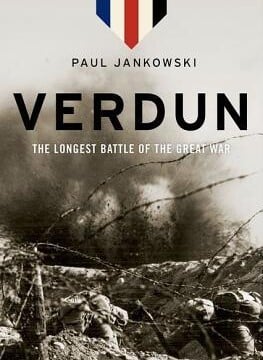
The 100th anniversary of the beginning of World War I has long been anticipated, judging by the publication of dozens of new books on what was called, until World War II, the Great War, although the Ghastly War might be more appropriate. Paul Jankowski, a professor of history at Brandeis University, has made a scholarly...
Getting Nixon Right
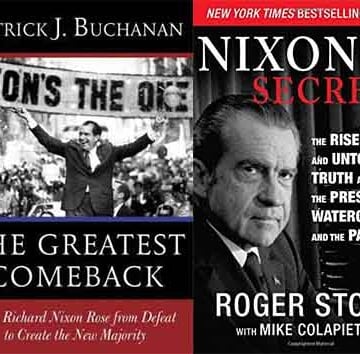
In November 1972 I voted for the re-election of President Nixon. Granted, it was only an elementary-school straw poll, but I was still thrilled when he carried the student body by a three-to-one margin. On election night, the electoral map was covered in a sea of blue (in those days each party retained its appropriate...
Speaking as an Irishman
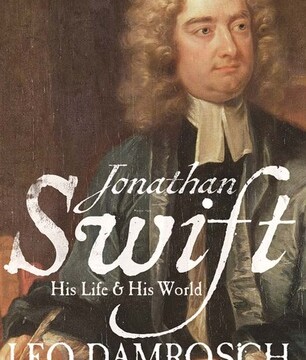
If the best advice one can give an aspiring writer of prose is to study the best models, then Jonathan Swift’s prose, as a lot of people who should know agree, provides the best model of all in English. A sentence by Swift is a miniature work of remarkable art: But when a man’s fancy...
A Strange Dearth
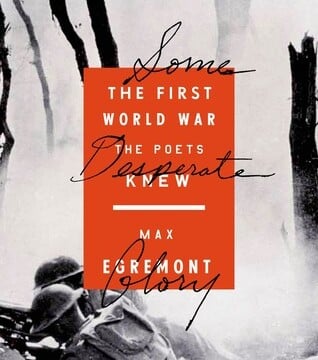
In 1985, in the wake of the 70th anniversary of the outbreak of the Great War, a plaque went up in Westminster Abbey’s Poets’ Corner, commemorating Richard Aldington, Laurence Binyon, Edmund Blunden, Rupert Brooke, Wilfrid Gibson, Robert Graves, Julian Grenfell, Ivor Gurney, David Jones, Robert Nichols, Wilfred Owen, Herbert Read, Isaac Rosenberg, Siegfried Sassoon, Charles...
The Father of History
Twenty-five centuries ago, in a narrow mountain pass 80-odd miles from Athens, the armies of Iran fought a brutal battle with the armies of Europe. The Iranians were defeated (not that day, but not long thereafter), putting an end to their ambitions to extend their empire into an unwilling West. The Iranians left, bitterly lamenting...
Pedestaled Power
Post-Christian beliefs permeate the culture. A stroll across the majority of university campuses, five minutes of channel surfing, the U.S. Supreme Court’s First Amendment case law, popular behavior and that of the American elite—these are proof positive that Christianity in the 21st century bears little resemblance to the Christianity of America’s not too distant past. ...
The Big Inequality
Readers who have been following the often-heated debate on Capital in the Twenty-First Century are likely to be astonished by the mildness of the author’s tone, and by his relaxed rhetorical manner. Indeed, Professor Piketty’s book owes nothing to its famous namesake beyond its title, as well as, more substantially, its grounding assumption that economics...
A Just and Honest Man
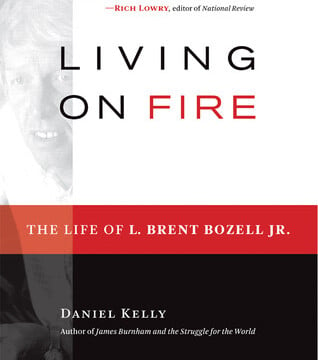
In its almost 60 years, much has been written about National Review, especially about those present at its creation. Most attention, of course, has been given to founder William F. Buckley, Jr., but others there at the beginning, such as James Burnham and Frank Meyer, have not been neglected. Yet no one, until now, has...
Confiscating Liberty
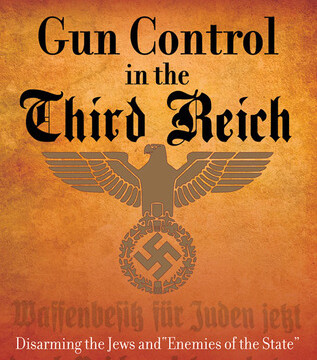
I first came upon Stephen P. Halbrook in 1984 when the University of New Mexico Press published his first book,That Every Man Be Armed: The Evolution of a Constitutional Right. Since Halbrook had both a Ph.D. in philosophy and a law degree, my expectations were high. I was not disappointed. Moreover, by the time I...
An Interwar Odyssey
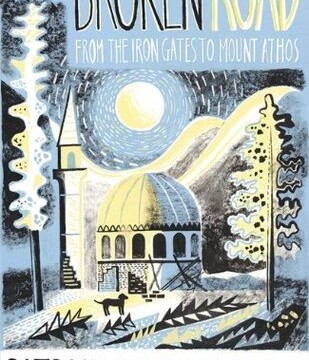
In 2011, Patrick Leigh Fermor became Patrick Leigh Former, and hundreds of thousands of devotees were doubly bereft. The first loss was the man himself, at 96 an antique in his own right, one of the last links to what feels increasingly like an antediluvian Europe, in which advanced civilization could coexist with medieval color...
Unshattered
Admittedly, I approached Amanda Bell with a degree of caution. I am, to say the least, wary of fiction, especially fiction centered around a female protagonist who is on a path of self-understanding and realization. The soppy novels of an Emily Giffin or a Helen Fielding come to mind. But rest assured, Jeff Minick’s first...
Diversity Where It Counts
A work of genuine scholarship tells us what we did not know before and does so felicitously—it is a contribution to the world’s body of knowledge. Discouragingly, a majority of academic books that have bounced across my desk in recent years either regurgitate what was told better long ago, or are the distorted remnants of...
Something With Pages
Some thoughtful soul, not I, would perhaps have some positive words about the present volume, and not without some justification. There is much to be said in praise of the Library of America and the quality of its volumes in various categories of presentation, and in the past I not only have acknowledged such manifest...
The Fruits of Fraud
The worst thing about the U.S. Supreme Court’s 1973 legalization of abortion in all 50 states and U.S. territories has not been the 55 million—and counting—dead babies, as horrible as that has been, but the damage it has caused to the rule of law, specifically the U.S. Constitution. In his dissent, Justice Byron White branded...
Free Spirit of Literature
Sam Pickering (born 1941) recently retired from professing English—mostly, it would appear, creative writing. Oh! “Beware! Beware! . . . Weave a circle round him thrice / . . . / For he on honey-dew hath fed / and drunk the milk of paradise.” If Coleridge had not crafted his magical lines for a figure...
How Not to Succeed in Washington
When I was younger and precociously interested in politics (I subscribed to National Review and looked forward to Firing Line every Sunday), I knew who George Kennan was. He was the brilliant author of the Containment Doctrine who had later gone soft on communism and become a liberal. If someone had told me, “No, it...
A Necessary Book
We have been enduring the cultural revolution of liberal modernity. It is hard to say exactly when that revolution began, but it took a great step forward in the 60’s, when social and religious tradition lost its last shreds of public authority, and another after the collapse of communism freed it to go wherever it...
His Land, His People
“Dickinson was, in truth,” writes William Murchison, as much philosopher as writer, a man to whom God had imparted the gifts not merely of expression but also of examination and reflection. Among the large fraternity active in the cause of independence, he gave place, intellectually, to no one. That being indisputably the case, Dickinson’s inclusion...
The Long March Through the Constitution
In the opinion of Marshall DeRosa, one of the contributors to this book, The transition from states’ rights to unitary nationalism, i.e., domestic imperialism, was the most significant development in American politics. This marks one of the worst fears of the framers coming to fruition, tyranny. That is a self-evidently correct judgment. It is also...
Black Hole Singing
There are three basic types of complexity a reader encounters in contemporary poetry. The first type arises when inexperienced poets have not yet developed sufficient intellectual and emotional depth to understand their subject matter or have not yet developed an adequate command of language. The resulting product is muddled rather than deep. The second is...
Worse Than Useless
Many a wise ancient employed allegory to elucidate meanings obscured by platitude, and so I thought, why not use the trick in this book review? The fact is, only the history of World War II is more densely populated with hacks than the history of the Russian “Revolution”—initial capital being part of that old scam—and...
Not What It Should Be
Yeah, it was a crisis—though few who, like the author, were sentient during the 50’s understood completely what was going on around us; viz., the erosion of the liberal intellectual order we had come, with notable encouragement, to take for granted. When I say “take for granted,” I mean just that. We had prayers before...
Botched Efforts
Judged on their own terms and with respect to the objectives of their own leading protagonists, medieval Christendom failed, the Reformation failed, confessionalized Europe failed, and Western modernity failed, but each in different ways and with different consequences, and each in ways that continue to remain important to the present. That is the author’s tactful...
The Person Is Always Becoming
Everyone in the Western world writes from left to right, so Michael Novak’s title is more cute than revealing. The subtitle, on the other hand, makes a claim: that he moved from at one point in his life being a liberal to an admission that, sometime before he reached his present octogenarian state, he was...
The Uses of American Government
That the republic has degenerated from a Protestant-inflected localized republic to a centralized bureaucratic imperial state is something most conservatives take for granted. The reason for such a transformation, however, sometimes becomes more assumed than proved. This compounds the difficulty of convincing liberals, and even some “conservatives,” that such a transformation has occurred. The secular...
The Most Truly Conservative Person . . .
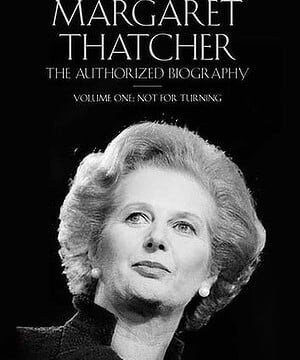
When Margaret Thatcher died last April, the obsequies were at times almost drowned by vitriolic voices celebrating her demise. There were howls of joy from old enemies, street parties, and a puerile campaign to make the Wizard of Oz song “Ding, Dong, The Witch Is Dead!” the top-selling pop single. (It failed, narrowly.) The extravagant...
Leftist Culture, Leftist Memory
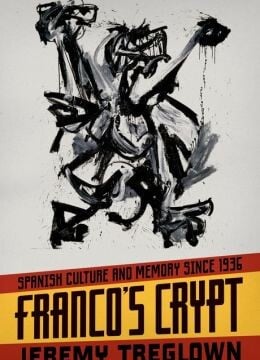
This book’s lugubrious title, Franco’s Crypt, indicates its partiality. Written in a fluid style befitting its author, who has published in the New York Times Book Review and served as editor for The Times Literary Supplement, the book draws on multiple sources, including necrology, photography, monuments, museums, art, literature, memoirs, histories, and school curricula. The...
Light From Elsewhere
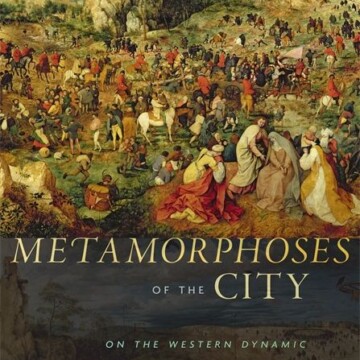
In the beginning, the poetic birth of the city becomes visible in the Iliad in the warrior camp of the Achaeans, in what Pierre Manent calls—in one of his most striking formulations—the “republic of quarrelsome persuasion.” We are not, of course, concerned here with the city as defined by, say, urbanology or archaeology, but with...
The Poet Malgré Lui
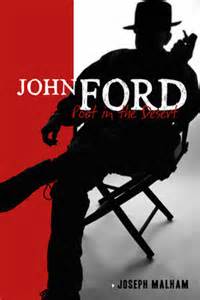
Over 30 years ago, when I was a seminarian in Rome, one of my professors exclaimed, “John Ford is the Thomas Aquinas of the 20th century.” Fortunately, at Columbia University I had studied under Andrew Sarris, the famed “auteur” film critic, so I knew the context. In any case, Ford’s reputation as certainly one of...
Proper Books
Way back in prehistory—1991, or thereabouts—a promising Alabaman author started to register on readers’ radars, thanks to lambent reviews from Northern litterateurs surprised to discover that there was at least one Southron who could not only write, but write as though an amphetamined-up James Joyce was simultaneously charioteering Jonathan Swift, Flannery O’Connor, and John Kennedy...
Out and About
The American Empire has been on the minds of at least some conservatives for about two decades, ever since the sudden collapse of the Soviet Empire caught us all by surprise. It isn’t that Americans haven’t argued about empire before: From the 1890’s until December 7, 1941, there was an on-again, off-again but very lively...